I wanted to get a clear view of what philosophers have influenced me the most. What ideas do I take, and how have they affected me in my life? Here they are in order:
1. Arthur Schopenhauer. He was known as the father of pessimism and if anyone knows me, I’m a pretty pessimistic kind of guy. What really fascinates me is his metaphysics. In a way, I somewhat agree with his metaphysics but I give a Camus-ian rejection of it as well. Basically, there is the Will , the will to live that controls everything in the universe. His famous book The World as Will and Representation starts off with these words: “The world is my idea.” He’s accepting Kant that the external world is known through our sensations and ideas. Experience is always from the perspective of a perceiving consciousness. Thus, the world depends on our consciousness. Along with Kant, we represent the world to ourselves rather than having immediate access to the underlying nature of reality. With this, the world as Idea doesn’t give us any knowledge of the true nature of things. So far, we only have appearances. This isn’t giving us much detail. According to Schopenhauer, this is what the previous philosophers have done. He accepts Kant’s distinction between the world as we experience (the world as idea) and the world as it really is (the world as will). The world as will is an indivisible whole. The division of things into particulars only happens in the phenomenal world. But we are part of the noumenal world. If we are part of the noumenal world, we must have the most direct and immediate knowledge of its nature. What is it? Remember, Kant said that we couldn’t. But for Schopenhauer, we can identify the character of the world as it is in itself. It’s within us: the world reveals itself to be “will,” a blind, ceaseless striving, the desire for existence. It’s the Will to Live. Things strive to exist.
When we will, we go beyond the realm of experience and get into the thing-in-itself. So we experience our own bodies both as idea and will. But remember, the will is all of the entirety of all that exists. So it’s not just human beings who are manifestations of the will: everything is an expression of the will. A lump of rock is an expression of the will. A driving, striving, persistent force, a spontaneous activity. The Will controls all.
Even your body comes from the Will. The blood is pushed by a will which we vaguely call life. Your brain is formed by the Will to know. Everything comes about through the Will. Now the intellect may get tired, but the Will never does. Everything is essentially Will. But more than this, what if the world was essentially Will? Remember Kant’s thing-in-itself: that’s Will. We do know Reality then after all. When we do things, it’s an expression of this Will.
So think about why you do things? Why do you do it? Schopenhauer has the answer. All of us has the Will to live. The enemy is death. Can we defeat death? In a way, yeah. We reproduce. We will sacrifice ourselves to our children. Just like the male spider who gets eaten to make sure his progeny lives on, and the wasp who goes and gets food to the eggs which the wasp will never see again, and much like our humans who sacrifice their time, energy, and money to make sure you are fed, clothed and educated. So beneath the surface appearance of things, we see a never-ending struggle for existence, desire succeeding desire, until life finally ends in death. But this is pointless. We work hard so that our children can have a good life. But why? It’s so that our children can work hard so that their children can have a good life. But why? It’s so that their children can work hard so that the next generation can have a good life, and so on. It’s absurd!
This will is a blind, ceaseless striving will. It desires for existence. This Will seems to be blind. We think that we’re choosing our mates. Nope, that’s actually the Will. How so? The Will tricks you into finding a mate but we just call it love. How do we choose our mate? We don’t; the will does. It’s an illusion that we choose our mate. Notice that when you’re old, procreation doesn’t seem interesting anymore. And when you’re young you want to procreate no matter who it’s with. The Will is strong but blind. Love is actually the Will tricking us to keep the species going. Marriage isn’t for mating, it’s to make sure that life continues. Nature doesn’t care if we’re happy or not as long as reproduction is happening. Love is a deception that comes from nature which makes marriage an illusion. To be married and to have sex means you sacrifice your individuality for the sake of the species. We’re unhappy married, and unmarried we are unhappy. In reality, there’s only life, only species, only Will.
History is not progressing. In every age, the wise say the same thing; even all fools act alike. Nothing is changing. It’s just the same thing again and again. We are all part of the Universal Will. So this will isn’t an intelligence. This will is a blind, directionless striving which makes us suffer. But if this world is will, it’s a world of suffering. The will is always wanting more and more and more, it’s never satisfied. For every wish that is satisfied, ten are denied. Desire is infinite; but fulfillment is limited. It’s like throwing money to a beggar in order to keep him alive today in order for his misery to prolong tomorrow. We constantly have desires, but we can’t fulfill them all. But this will must live, and it’s a hungry will. So then what? Life is actually evil, plain and simple. When we’re happy, it’s only temporary. It’s only relief from wanting what we’re seeking. Finally, life is evil because life is war! Everywhere in nature we see pain, suffering, strife, competition, conflict, and turmoil. All species fight. We’re unhappy alone, yet we’re also unhappy in society. We are like porcupines: we come together for warmth and security, but then we get too uncomfortable when we’re too close, yet miserable when we’re apart. Life is a chore, we all do the same thing. And finally, in the end, there’s death. But even death plays with us a little. We become slower and stupider and death won’t take us away from our miserable lives. Just as we get the hang of our wisdom and the world, our bodies and minds begin to decay. It possibly would’ve been better if one never existed at all.
So then what’s the solution? We must stop it at its source: to stop the will to live, we must stop the will to reproduce. That’s it: stop reproducing. Deny the will to live. Why bring more life into this miserable, suffering world? So renounce the world, and when you do that, you can renounce the Will. It’s much like rebelling against the Will by denying what the Will does to you. Life isn’t that great. In fact, it’s a huge lie. Death, or more specifically, non-existence is truly the greatest solace.
2. Ludwig Wittgenstein.  Philosophers like to ask themselves these generic Socratic questions: What is x? and x is usually good, justice, beauty, friendship, courage, loyalty, love, art, and so on. Wittgenstein just wants to say, “stop!” You already know these definitions based on the context of your language. It’s odd that you know how to say the word “good” but when you do philosophy, all the sudden you’re asking “ahh, yes but what is the ‘good’?” Wittgenstein thought this was just absolutely crazy.
So with Wittgenstein, if you want to clear up some philosophical problems, you must pay attention to your language. From there, you don’t solve the problem; rather, you dissolve the problem by noticing that your language was causing the problem in the first place. For Wittgenstein, all philosophical problems just comes down to language puzzles that philosophers get themselves into.
The meaning of words isn’t some correspondence, or copying of the world. Although he did hold this view in his early works. Instead, meaning is based on how the word is used.
I thought his family resemblance model was genius. Words don’t stand by themselves; there is always a context with them.
3. The Existentialists. Jean-Paul Sartre and Albert Camus.
 Even thought Camus didn’t consider himself an existentialist, he does bring out existential themes which I think is a good reply to Schopenhauer’s solution. However, I do think Schopenhauer can have a good reply. With of them, philosophy is pointless unless you can do something with it. In other words, you must be engaged in whatever you’re doing. But most importantly, you must be engaged in life, even an absurd one.
Coming from Sartre, ywe are absolutely free. Now, this isn’t the thing that I’m concerned with. It’s possible that we are determined, who knows? What I really enjoy is what we can do–or better yet–what we should do with our freedom. Since everything is our choice, even not choosing is still a choice. Thus, not only are we responsible for the things we are doing, we are also responsible for the things we are not doing. We are loaded with heavy responsibility just because we are thrown into the world. So we exist, now do something with it. I don’t know what to think of Sartre’s notion of human nature. But what I really want to emphasize on is the notion of responsibility and how we are our responsibilities has a bigger impact than we think.
As for Camus, I really enjoy his whole notion of the Myth of Sisyphus by bringing up that our lives amount to nothing and that there is no point, purpose, or meaning to life. But amazingly, this isn’t something to despair. To tell you the truth, I’ve never really why people have found this with despair. I guess it’s because people are addicted to meaning. With this, we can live life passionately. Meaning seems to be tied with suicide and suicide is admitting that the absurd is too much. So like Sisyphus, you accept the absurdities of life and embrace it. People don’t want to because. . . well, it’s absurd. But I actually find meaning, at least absolute meaning, dreadful than one without.
4. Karl Marx. When you think of Marx, you automatically think of communism, politics, or economics. To tell you the truth, that stuff doesn’t really interest me. His view of politics is a slanted for my taste, and his economics were just flat-out wrong. There are two things that I adore about Marx: his view of history and how to live your life.
With history, you economics brings forth your superstructure (such as your ideas, religions, and morality). Indeed, economics drives history. That, as far as I can see, is very true. If you want to know where history is going, if you can’t find an answer the the troubles of the world, the answer is usually dealing with money. Always follow the money. So history is driven forward by ideas. Rather, ideas are the effect of the movement of history and the economics are the cause.
In terms of how to live your life, you try to get away from an alienated life and live a species-life. To get a way from an alienated life, imagine working your job with full awareness and, dare I say, passion. Imagine working at your fast-food place not with dread, but with a sense of creativity (I will flip this burger this way and I’ll make the fries that way). You become fully aware of your work and with that, you can be creative in what you’re doing. By doing this, you don’t have to commodifiy everything around you and you look at things with intrinsic value.
Perhaps the Frankfurt School had a bigger influence on me rather than Marx but I think Marx has a good starting point here.
There are the main four, but I’ll give in some smaller outlooks on the various subjects of life. With these next topics, I don’t have a set outlook on these, but it’ll still show my influences.
Metaphysics: I’d have to go with Pragmatism. Do Plato’s Forms exist? Does God exist? Is the Logos real? What is reality? For the pragmatists, these questions don’t make a difference in my life. Thus, it doesn’t matter to me. And that’s all I need to say about this.
Truth: same thing with pragmatism. However, I’ll add some Nietzsche by saying that perhaps it comes down to some perspective but overall, I’m not interested in the overall truth.
Freedom vs. Determinism: again, I’ll have to go with the pragmatists. Do we have free will or are we determined? Well, we act as if we have free will, but whether we really are or not, it doesn’t really matter.
Religion: it’s a combination of Daniel Dennett, Kierkegaard, and pragmatism. I wrote a paper on it which you can see in a previous comment here.
Epistemology: again, I’m going to have to go with the pragmatists again. Although I really like Hume’s mitigated skepticism where we must always remain skeptical until there’s a reason to believe. It’s a useful type of skepticism where you don’t doubt everything in hoping to find something certain, but an attempt to keep in mind “the strange infirmities of human understanding.” It calls for modesty and caution. It will teach us the limitations of the human capacities and encourage us to devote our understanding, not to get involved in the problems of metaphysics or theology, but to the problems of common life.
Mind/Body: I’m more in the functionalist camp. The mind is like a software much like a computer is like a software. With this, I find that the more I read Dennett’s stuff, the more I agree with him. If it has intentions, we can say that it has some sense of a mind.
The self: I lean towards Sartre on this. The self is always being created by your choices. Thus, your self ends when you don’t choose anymore. By your choices, your self is always changing.
Ethics: I like Aristotle’s theory the best. Ethics doesn’t come down to rules or principles, but it deals with your character. Acting in the world is always dealing with your character. When people ask what we should do, they always focus on the behavior or our thinking patterns. But I’ve never understood why people ignore character. If you want people to act a certain way or to think a certain way, then you have to go back one step further and talk about a person’s character. That’s how you change their attitude, not by rules.
Aesthetics: honestly, I haven’t thought about this that much. I’ve only taken one aesthetics class as an undergrad and I haven’t thought about it sense. I do remember that I really liked Wittgenstein’s view of it. Art is dealing with a family resemblance which comes about through our use of language.
Love/Human Relations: finally, I always come back to this because this is my specialty. It sounds pessimistic but I think Sartre has grasped a sense of the truth when it comes to love: it’s all sadomasochistic and “hell is other people” as he says it.
This is as much as I can think of, but I’d be happy to explain more if needed. Feel free to comment on the blog so that we can get a dialogue going.

 Taken from the article:
 But in order to protect Gauguin, they both agreed to tell the police that it was Gogh himself that cut off his own ear. There’s even a book released entitled Van Gogh’s Ear that has been heavily researched. For all you art fans out there, I’m sure this is one sure to please.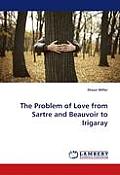


 Shaun Miller's Ideas