
Many people are very happy about this new Health Care Bill. At the same time, many people are skeptical and say that this will actually create more problems in the future. To be honest, I’m actually torn. I think both sides make compelling arguments. I don’t mean the particular politicians, but the issue itself is divided because both sides can equally be argued for with good conviction. First, let me explain the arguments (at least, the way I see how the arguments are represented), then perhaps you can see why I’m torn. Of course, you may reply, “It’s obvious, Shaun, that this side has more benefits than the other.” Perhaps, but I want to be clear about these arguments before I make a full decision. First, let’s get the facts down. (I didn’t originally come up with this idea. Rather, I got it from this site):
The bill would:
- Expand coverage to 32 million uninsured in the U.S.
- Create insurance exchanges. The uninsured, self-employed and small businesses could purchase insurance through state-based exchanges. There are subsidies to help purchase insurance through the exchange for those who make between 100 and 400 percent of the federal poverty level.
- Expand Medicaid to cover those who make up to 133 percent of the federal poverty level. Undocumented immigrants are not eligible for Medicaid.
- Close the so-called Medicare “donut hole,” a costly gap in prescription drug coverage for seniors.
- Ban higher premiums and denial of coverage because of preexisting conditions.
- Ban higher premiums for women.
- Require coverage of maternity care.
- Allow children to continue being covered by their parent’s plans through age 26.
- With some exceptions, require all U.S. citizens to purchase insurance or face a $695 annual fine.
- Require those with 50 or more employees to insurance or pay a $2000 fine per employee every year if any employee receives federal subsidies for purchasing insurance. The actual employer mandate was removed by the Senate.
- Ban undocumented immigrants from purchasing insurance with their own money in the new exchanges.
- Ban the use of federal funds to pay for abortion in the exchange, which experts say will eventually eliminate even private insurance coverage for abortion.
Additional summaries of the bill can be found here and here. Many more documents, including the full bill and summaries, can be found at the Speaker of the House’s website.
For Health Care:

- First of all, it seems that the main argument proponents of health care claim is that it’s a matter of justice, more specifically social justice. The question is: “How can an advanced country like the United States not be able to give it’s own citizens a decent standard of living?” Well, let’s see if this argument holds. Can we readily apply it to other things? One basic thing we need to survive is water. Does the government provide that? Yes and no. The government does have a standard on what type of water should be running through our pipes before it reaches our homes. It must be drinkable and healthy to bathe and cook with. On the other hand, you do have to buy this water through the government (that’s what the utility bill is). We all need air and shelter. Does the government supply this? Yes and no. The government does give restrictions on how much pollution one can make and certain standards of how a house can be built. However, you have to buy your own shelter. Air, however, is free. So I guess in a sense, the government does provide healthy air for us. Is this analogous to health care? By 2013, every citizen must have health insurance and if you can’t afford it, then the government will help you out with that.
- This bill also forces insurance companies to accept anyone. They can no longer deny people because of pre-existing conditions. One argument against this is that there are going to be so many people who are sick and since the insurance companies can’t afford to pay for all of these sick people, they’ll have to raise premiums in order to pay for this. I don’t entirely buy this argument. Suppose we have 10 people who have had cancer can now buy insurance but they couldn’t before because the insurance companies denied them because of a pre-existing condition. But if everyone has to buy health insurance, then the insurance companies will have a huge influx of customers. Thus, it seems that for every 10 people who has cancer, there will be 100 people who are healthy. If all of them buy insurance, then those 100 people’s money will help take care of those 10 people who have cancer. Thus, premiums won’t have to be higher. Indeed, if more people join up to an insurance company, the supply will be so high and the demand will be so low, that it actually makes insurance rates cheaper. Now, I haven’t actually crunched any numbers or anything. So the variables are: new people paying for insurance, how many of these people have pre-existing conditions, the total amount of revenue, subtract the new care that these new patients need. I’m not saying that is for sure, but it’s a possibility.
- If everyone is mandated to purchase health care, the insurance companies will have a huge influx of customers. So, in a sense, that’s a good deal for insurance companies.
 Who knows? This might actually be better for the common good. People have the fear that if the government does some activity, it’ll make things worse for us as individuals. In a previous post, I mentioned that this fear is unfounded. Remember, two steps back, five steps forward. Taxes are helpful if it does indeed provide for the common good (including you).
- There is many studies that show that the costs are actually better. You can see that on a previous post and some other bits of info:

- This may pass the Rawlsian test: behind the veil of ignorance, you don’t know if you could be someone without insurance.
Against Health Care: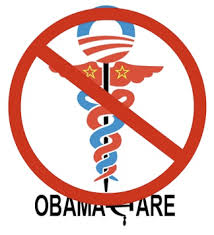

- By 2013, people are forced to have health care. That means every citizen must have health insurance whether you want it or not. That does seem pretty authoritarian. Even if the government does have the ability to help those who can’t afford it, the only way to do it is to raise taxes, which thereby means that the people have to help pay for those that can’t afford it. That doesn’t seem very fair.
- With this, it’s mandated that everyone must purchase health care. If that’s the case, then any citizen can now see the doctor easily because they are now covered by insurance. However, let’s say that most people don’t have health insurance because of some pre-existing condition. Now that they’re covered, they can now go to the doctor and get the care they need. But now, there will be a huge influx of patients and the amount of doctors will stay the same. Thus, the demand for care is higher, the supply will be the same. The law of economics says that prices will therefore go higher. But what price? Either premiums will (insurance has to make up for this by charging more), or the government will raise taxes (if the customer needs a subsidy). Either way, the American public has to pay higher prices just to have care.
- Along with the line of thinking above, if the supply of doctors is the same, but the demand is higher (because of the new influx of patients), then the waiting period will be longer to see a doctor. (However, one opposition to this is just because one has health care, it doesn’t mean that they’ll use health care by seeing a doctor. I have health insurance, but I hardly go to the doctor. Nevertheless, doctors will get more patients to see and it’s hard to say how much more.)
- It’s fiscally irresponsible. Why should I pay for someone’s irresponsible health care? I’m in charge of my life, thus I should be the only one responsible for my own care.
- This doesn’t pass the libertarian test. By far, it actually opposes it. Now I’m not saying I’m libertarian or more of a Rawlsian; I’m just pointing out that it doesn’t pass this test.
 The last Gallup Poll shows that most people are against this particular bill. If Congress represents the people, then shouldn’t they vote based on the people’s wishes? (Of course, some exceptions exist, but with health care, I think it’s one where it’s based on the will of the people.)
- If this thing turns out to be a disaster, it will be really hard to repeal it. It seems that this things is here to stay and all we can do is modify it, but never get rid of it, for better or for worse.
- I’m no lawyer, but many attorney generals are suing the Federal Government because this may be unconstitutional. It could be, we’ll have to wait and see.
The day after, I checked out news sources to see what people were saying. Believe it or not, I think Bill O’Reilly has the best route. I don’t agree with his approach, nor do I agree with his conclusions most of the time. However, I like his methodology of fact-checking. The episode was on March 22, 2010. There are two things that I want to mention that I somewhat agree to:
- He did say that what this comes down to a welfare state in which the government helps out the unlucky folks vs. a small government that stays out of people’s lives. In a way, it’s true but I think it’s more fundamental than that. I think both sides have something in common: justice. The Democrats are appealing to a sense of social justice: raising the standards of living by raising the minimal level of health, letting the health pie be distributed more, and having healthy citizens. On the other hand, Republicans are appealing to a sense of economic justice: more government means more taxes, the economic pie will have to be distributed even more so, and we’ll have another social program where the private sector could do it. Here’s my take: taking everything together, which has more weight? Which do you want more: social or economic justice? Well, it’s really hard to tell. We want both and I think that’s why this is such a divisive issue. How can you compare social and economic justice? They seem to be irreducible and incommensurable. If, however, someone can reduce them down to pure numbers, that would help. But there seems to be so many variables when one tries to make social justice into a quantifiable number. This leads me to number two that O’Reilly said:
- In the end, O’Reilly says that no one knows for certainty. He critiqued the left saying that they can’t know with certainty that this will work. But he also critiqued the right saying that they can’t know with certainty that this won’t work. O’Reilly even said that this could turn out to be a disaster for the country, or it could end up being a great thing at little cost, which would also be great for the country. Of course, O’Reilly believes that this will not work, but what’s great about this methodology is a little mitigated skepticism. This is why when it comes to a divisive issue such as this, almost everyone is dogmatic because of their ideology. We need a little skepticism in everything. I’m not talking about a full-blown antecedent skepticism, but some skeptical notions that doesn’t appeal to a certain core framework of ideals and be open to the fact that one could be wrong.
There are so many variables in this and when there are variables, they are by definition unknowns. If I asked you what is x+4, you couldn’t give me an answer because we don’t know what x is. Well, in the health care debate, there are many x’s. Thus, the mitigated skeptic can only say, “I don’t know if this will work, however I believe this will/won’t work.” Until we can figure out the variables, the best I can say is I don’t know.
Feel free to comment and any other ideas that belongs to either. Again, I must remind people of my comment policy. Also, no rhetoric, I can’t stand it.
Update (3/23/2010): I have found more info about people who are not mandated to buy insurance:
- The penalty will be phased in, starting at $95 or 1 percent of income in 2014, whichever is higher, and rising to $695 or 2.5 percent of income in 2016. But families would not pay more than $2,085.
- American Indians don’t have to buy insurance. Those with religious objections or a financial hardship can also avoid the requirement. And if you would pay more than 8 percent of your income for the cheapest available plan, you will not be penalized for failing to buy coverage.
- Those who are exempt, or under 30, can buy a policy that only pays for catastrophic medical costs. It must allow for three primary care visits a year as well.
 She has also made a
  UPDATE: 6/17/2010 Well, believe it or not, I finally read the book. In a way, it reminded me of The Chosen by Chaim Potok. It’s about an atheist who writes a bestseller about atheism and throughout the novel, it bounces from the past and the present about the main character’s experiences of people with spirituality and how they view the world. The climax of the book is the debate between the atheist and the believer at a formal debate. All in all, it wasn’t bad, but it is extremely erudite. You should be somewhat familiar with philosophy (a lot), Judaism (particularly Hasidism), Game Theory, psychology, and messianism. However, I still think the appendix is the best which you can still see from the links above.





 Shaun Miller's Ideas