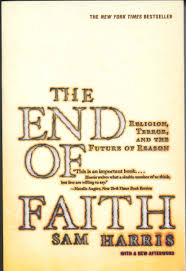
Fareed Zakaria: Will the Republicans follow through?

Fareed Zakaria has a very nice analysis of what the Republicans should do after this midterm election.  Perhaps the best advice he could give:

These are not political statements. They are mathematical ones, and it is on understanding math, not politics, that the third Republican revolution now rests.
All I can say is I hope the Republican party follows through with this advice.
Posted in Economics, Fareed Zakaria, News | 2 Comments

Let’s See What’s in the News Today: 11/07/2010

New studies show that alcohol is actually more dangerous than cocaine, heroin, and marijuana.

When Mark Twain died, he left in his will that his autobiography should not be published until 100 years after his death.  Well, it’s now been 100 years.  You can now buy your copy and celebrate the genius of this literary man.

Finally, the Republicans took control of the House during the midterm elections.  Honestly, I’m satisfied with this election.  Why is that?  It’s because many key players on both parties are still in, but at the same time, the major Tea Party members are not.  I was worried that Sharon Angle of Nevada and Christine O’Donnell had a chance.  They didn’t win which I’m thankful about.  Unfortunately, Russ Feingold, whom I consider a very independent politician didn’t win.  However, two Republicans that did win, Rand Paul of Kentucky and Rubio from Florida, are Tea Party favorites.  However, I find both of them a refreshing need for the Republican party.  The Republican party has lost it’s focus because it has shifted from your typical American Conservativism, which has some of its roots in Classical Lockean Liberalism and Burkean Conservativism, into a unfortunate Religious Conservativism.  Rand Paul seems to be more in line with his father, Ron Paul which is the kind of conservativism I prefer.  It’s what I would call a typical Barry Goldwater Conservitivism.  I’m hoping that a Ron/Rand Paul type of conservativism is more common within the Republican party over the coming years.

Speaking of which, economist Steve Landsburg gives some advice to the incoming Congress.  The comments are worth reading through as well.

There’s a pair of conjoined twins but here’s a twist: they joined at the skull and at the brain. So are they two brains with two different personalities, thus two people?  Or is it one brain, meaning one person but has split personalities?  From reading it, one is thinking a thought and the other knows what the other is thinking.  One sees an object and the other grabs it.  Fascinating stuff on the philosophy of personhood!

And now for something cool, the fastest goalie I’ve ever seen:

Posted in News | Leave a comment

Newsbits: 10/31/2010

An interesting article about how the latest Arizona Immigration bill was helped by prison economics.

Philosopher Jean Kazez writes about the aesthetics of Eminem’s lyrics and how it is poetry.

A great speech by emphasizing reason instead of rhetoric.

I asked a great logic question online and it led me to this site which helped out.

According to fivethirtyeight.com, Republicans will take the House on Tues. but not the Senate.  They were extremely good at predicting the Obama election.  Let’s see if they get it right again for this one.  Check it out on your state to see if you Rep., Senator, or Governor makes it in or not.

Posted in News | 3 Comments

An Argument Against Pennies

Wanna save the taxpayer some money?  Watch below:

Seems to make “cents.”  Sorry, couldn’t help it.

It may go against common sense, but remember, reason is sometimes opposed to common sense.

Posted in Economics, Humor, Logic | Tagged , , | 1 Comment

Awesomeness is Everywhere

If you’re feeling down, just go here.  It’s a site about how even the little things that we take for granted are actually pretty awesome.  My day is getting better all the time.

Posted in Emotions, Values | 3 Comments

Learned Helplessness: Why People Won’t Work Because They’re Lazy Isn’t Always the Correct Answer

Think about this: people generally don’t avoid work.
Let’s be serious.  Consider this question and answer it honestly: suppose someone offers to support you all your life, but only on one condition: you can never do any productive work.  You’ll spend your life just sitting around.  Would you do it?

I don’t know about you, but I wouldn’t accept that offer and I don’t think many people would.  Think about the hard hours you put into your job, completing a project that you find worthwhile.  You may be tired, but you also find it very satisfying.  In fact, do you know what the best sign of laziness is?  Depression.  It’s where you feel like you don’t do anything.  You just want to sit around, and it doesn’t seem worth it to give any effort.  And that’s not a desirable state.  These people don’t want to work, and that’s because they have this feeling of hopelessness and are severely depressed.  Now what type of people are going to feel this way?  It’s when they have these dead-end jobs that don’t give them satisfaction.
If this is the case, then placing people in desperate poverty is actually not the best way to encourage effort.  In fact, placing them in poverty makes things worse.  It makes them have a sense of helplessness, a sense that things are now out of my control.

Have you heard of Martin Seligman?

He did some research what is now called “learned helplessness.” The experiment was he placed dogs in restraining harnesses: they couldn’t escape, and he shocked them repeatedly.  Then, he took these dogs out of the harnesses and placed them in shuttle boxes: boxes with two compartments and there’s a wooden barrier.  The dog only had to jump over the barrier.


On one side of the compartment, the floor would still shock them.  Now the dogs who have never been shocked would immediately jump over the barrier.  The dogs who were harnessed and were shocked repeatedly stayed in the shocked floor, just waiting for the shocks to stop.  These dogs gave up.  Eventually, these dogs just lied down, whining while they were being shocked.  They even dragged the dogs to the other barrier where they wouldn’t be shocked again.  But as soon as they were placed in the shocked section again, they still wouldn’t escape, but they stayed and they cowered.  They had to be dragged again and again, repeatedly encouraged to escape, until finally they got over their helplessness and started to escape on their own.

Now this has been done on humans as well, not shocking them, but similar modes.  The upshot is that when people give up, we feel disgusted by them.  We say things like, “why don’t they try?  How can we help him if he won’t try?”  It’s the same thing.  Have you known women who won’t make any effort to escape their abusive husbands?  How about students who give up on school?  It’s the same thing: there are long-term impoverished people who have gained this “learned helplessness.”

We often say that people do these things because they choose it.  Sure, but their options are extremely limited.  People sometimes have to choose terrible things because in practical terms, they have no choice.  Prostitution is a good example of this.  Now, I’m sure there are some women for whom sex work isn’t a last resort, but as a deliberate career move, but in many cases they are driven to it out of desperation.  Also, the fact that something unpleasant is the best choice available to someone doesn’t make it ok, if they could be offered something better at little or no cost.  For example, managers in factories in the developing world often refuse their workers sufficient bathroom breaks, deny them drinking water, and fails to follow local laws or health and safety procedures.  So what if working in one of these places is still the best option locally?

In the latest study, the major component of depression was actually unable to work.  http://familyinequality.files.wordpress.com/2010/10/depression-inequality.jpg

People throw in a red herring when they say that if workers were paid US wages in some third-world country, employers wouldn’t be able to hire them.  But the choice isn’t between sweatshops or Western pay and conditions, it’s between the opportunity to earn a decent job or working long hours in poor conditions for barely enough to live on.  Simply saying people should just “buck up” is avoiding the issue.

Posted in Economics, Politics, Values, Work | Tagged , , , | 20 Comments

Why “Well, it’s just my opinion” fails

At Overcoming Bias, there’s a great list on why opinions are “signs that your opinions function more to signal loyalty and ability than to estimate truth.”

My favorites are:

2. You have little interest in getting clear on what exactly is the position being argued.

4. You have little interest in digging to bigger topics behind commonly argued topics.

6. You are uncomfortable taking a position near the middle of the opinion distribution.

9. You find it easy to conclude that those who disagree with you are insincere or stupid.

10. You are reluctant to change your publicly stated positions in response to new info.

16. Your opinion doesn’t much change after talking with smart folks who know more.

19. You feel passionately about at topic, but haven’t sought out much evidence.

Let me also add that when people are expressing an opinion, usually they’re not.  The best examples are done in politics.  When they are expressing something, they are stating an argument.  But then when you ask them to justify what they just said, the response is, “well, this is my opinion.”  No it’s not!  An opinion is where you are expressing some subjective point, and typically, they’re pointless to argue about them.  Vanilla is my favorite ice cream flavor.  That’s an opinion.  It seems odd to argue about that.  Obama is a good/bad president.  That is an opinion.  However, if you say Obama is a good/bad president because. . . or if someone asks you why you believe Obama is a good/bad president, you are now in the realm of argumentation and simply saying “well, this is my opinion” doesn’t hold.

Posted in Experts | 2 Comments

Book Review: The End of Faith by Sam Harris

I have read three of the four so called “Horsemen of the Apocalypse.”  They are: Sam Harris, Daniel Dennet, Richard Dawkins, and Christopher Hitchens.  I don’t plan on reading Dawkins book, at least not for a while.  From the excerpts I’ve read and from what I’ve heard, he’s basically doing a straw-man fallacy.  I would also include Victor Stenger as part of “The New Atheists” but he hardly gets any media attention.  From what I’ve read and heard, these New Atheists are playing the same game but with new cards.  Do they contribute something?  Yes, but I don’t think it’s original.  If you want a good atheistic book that deals with the hermeneutics of suspicion, I recommend Nietzsche, Freud, Marx, and Sartre.  These New Atheists are regurgitating the same arguments, but for modern times.  Nevertheless, if you ever get to read these New Atheists, I highly recommend Dennett’s book at least.  I’ve written about him from before, and he has certainly influenced my way of thinking in terms of religion.  I would avoid Hitchens at all costs.  His book is simply vitriolic, acerbic and filled with ad hominems that isn’t worthy of a book.  All in all, the New Atheists are starting (assuming?) atheism and so they have different projects.  Dennett’s is how can we explain religion through evolutionary means.  Hitchens is simply anger because religion doesn’t do anything, in fact it makes things worse.  Dawkins, as far as I can tell, is saying that science explains everything, so why add God into the picture?  At the same time, I do see Dawkins giving a Dostoevsky reason why one should rebel against God, but no one seems to pick up on that.  How does Harris stand in this array?
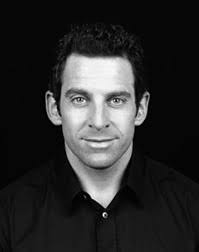
To start, these New Atheists are bringing up two questions:  1.  Is religion rational?  2.  Does religion lead to violence?  Let’s see what Harris says.

Harris’ claims can be summed up by stating that religion is dogmatized irrationality and it should basically stop.  From there, religion is irrational because it is based on illogical premises and it is inherently violent.  But now what about these “religious moderates” who don’t fit into the purely secular or the fundamentalist fringes?  Harris’ claim is shocking.  Even religious moderates aren’t helpful.  Indeed, they just exacerbate the problem.  This is because religious moderates are the ones who tolerate other religions.  Therefore, religious moderates condone violent acts from religion.  Already, I see a problem with this.  Religious moderates are angry for the unjustified violent acts.  However, they can differentiate between violent acts and religious intolerance.  Now, Harris claims that religious intolerance leads to violent acts.  But if this is true, then religious moderates (which, by definition, are tolerant of other religions) will not lead to violent acts.  It seems that the solution is to increase tolerance, not get rid of religion itself.  But Harris continues on: the reason why there are religious moderates in the first place is because science and living in the modern world have caught up with them.  And that in order to keep up to a modern society, the first thing that must go is some religious literalism (or perhaps ignore religious precepts altogether).  Harris writes “The moderation we see among nonfundamentalists is not some sign that faith itself has evolved; it is, rather, the product of the many hammer blows of modernity that have exposed certain tenets of faith to doubt” (p. 19).  This is something that I do think Harris contributes to the discussion.  Religious moderates aren’t genuinely religious.  Pure religious people are, by nature, intolerant.  Here’s the common sense view:

  1. If people are religious, and there also exists a modern society, then religion and modernity can co-exist.
  2. People are religious, and there also exists a modern society.
  3. Therefore, religion and modernity can co-exist.

In an interesting move, he flips the typical “common sense” argument on its head:

  1. If one is serious about religion, modern society cannot exist.  The fundamentalist wins because it stems from purely religious texts, faith, and irrationality.
  2. If a true modern society can exist, then religion should be gone, or people won’t take it seriously anymore.  The secularist wins because a modern society comes about from reason.
  3. However, people are religious, and a modern society does exist.
  4. Therefore, these religious people (who are neither fundamentalists, nor secularists, but moderates) are not taking their faith and reason seriously.
  5. Thus, religious moderates both fail to be genuinely religious and rational simultaneously.

I think, however, that this comes down to psychological and cultural preferences rather than a reasoned out dilemma.  In this, I find Dennett’s notion of belief in belief to be very apt as to why religious moderates exist.  It comes down to form an epistemic community rather than basing beliefs on some metaphysics.  Beliefs have become practical rather than evidential, and while Harris does sponsor a view close to W. K. Clifford’s evidentialism, I believe that Harris misses the point on why people believe, especially the moderates.  Their beliefs hold, but the practices don’t.  But this isn’t coming from a view that people have kept up with the modern world (although that could play a factor).  Rather, it’s because it’s part of one’s epistemic community.  Of course, I guess it comes down to how one defines “religious moderates.”  Does Harris say it’s the people who believe and are part of the practices, but who aren’t violent?  If so, he’s leaving out a demographic: the people who do believe but don’t practice.  And it’s these people that Harris isn’t speaking about.  On the other hand, Harris mentions that religious moderates aren’t authentic on their religion because they don’t fully follow the precepts exactly of their religious texts.  On this point, I think it’s true, but on the other hand, there are instances where people become moderate because of critical interpretation of the religious texts.  This doesn’t happen among the lay, but it does happen and this could trickle down to the lay.

Secondly, Harris is simply wrong that faith doesn’t evolve.  Religious beliefs, practices and faith itself does evolve.  If it doesn’t, that religion won’t survive.  This has been a constant in any intro to sociology class.  Religion does evolve to the modern world and people of faith don’t give up the faith because of new modern thinking.  Rather, or typically, believers accommodate both modernity and their faith into a new light.

Thirdly, Harris states that “the religious moderate is nothing more than a failed fundamentalist” (p. 20).  I guess one man’s equalization is another man’s contrapositive: maybe it’s the fundamentalist who failed to be a religious moderate.  However, religious moderates betray faith and reason equally because they’re not being sincere in their religious beliefs, nor are they being serious in their rationality.  Secular knowledge has forced moderates to ignore some of their religious claims.  Moderates aren’t truly religious.  In this, I somewhat agree, but I’m more inclined to Dennett’s thinking than Harris’s.

We can see Harris’ assumed epistemology: evidentialism, which is brought forth by Clifford’s essay.  By applying this standard, Harris notes that people who seriously believe certain propositions, they will act on them.  From here, there are certain beliefs that are intrinsically dangerous.  Moderates are part of the problem because they hold onto these religious beliefs.  Therefore, any toleration of religion (which is what the moderates do) is disastrous.  From this epistemic standpoint, religious beliefs are invalid because there’s no evidence to support them.  Here’s the problem: people aren’t evidentialists.  Yes, it could be nice if they were, but people believe not because of evidence.  Again, it comes from an epistemic community of believers and in this sense, Dennett is closer to being correct.  People do not follow the evidence conclusively.  Thus, one does not act out on one’s beliefs all of the time.

Harris brings up the disasters and violence that religion has done, but to me, these seem to be a non-sequitur.  People have done horrible things in the name of religion, but one cannot conclude that religion is therefore inherently dangerous.  In order for this to be so, Harris has to convince me that religion isn’t merely an instrument.

He brings up a bold claim that no politician would dare to say: we (the western world) are at war with Islam.  To be clear, he’s not saying we are at war with Muslims.  He wants to fight the religion, not the participants of religion.  He brings up points that no one recognizes: terrorists are actually rational, and studies show that terrorists actually come from middle- or upper-class upbringings.  The latter is easy to defend empirically, but what about the former?  Again, this stems from Harris’ assumed epistemology.  If beliefs dictate actions, and beliefs stem from religious propositions, and these religious propositions say to be violent, then the rational person would act violent.  There’s nothing crazy or flawed with this.  But if this is the case, isn’t every proposition rational if someone believes it?  But then how does one distinguish between rational and crazy?  Harris has an answer: the crazy people are those how hold onto a proposition but don’t act on it.  This sounds like they are the religious moderates which really flips the argument on its head.  He does bring up possible objections, that the reason for 9/11 was because of America’s bad foreign policy.  However, he uses radical people (Jean Baudrillard and Noam Chomsky) to represent this view.  But this is a serious flaw.  He can’t use radical people to represent a claim x and then as soon as he shows the flaws in their thinking, states that claim x must therefore be true.  To get a serious representation of claim x, he must include people that aren’t part of the fringe.
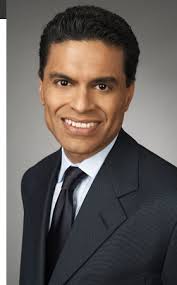
To be fair, he does bring up Fareed Zakaria (someone whom I admire greatly).  Zakaria’s position is something that I believe is a respectable position: the reason why there’s a mess in the Middle East isn’t stemming from religion, but from a lack of resources, bad politics and horrible economies.  Thus, if we modernize the Middle East so that there are stable, the Middle East will be caught up with the modern world and the violence will be lessened.  Harris’s reply is that people like bin Laden and countless others are wealthy and the have a high education.  Thus, one can have great economic prosperity, have a high education, but still be religiously intolerant.  The problem, therefore, is religion.  It is here that I think Harris has a very interesting syllogism:

  1. Either you believe that Islam is inherently dangerous, or it is not.
  2. If it is inherently dangerous, then any form of uncontainability will make things worse.
  3. Democracy is a form of government that (among other things) makes them part of the uncontainable world.
  4. Therefore, if Islam is inherently dangerous, bringing them democracy will just make things worse because they will bring more violence to the world.
  5. Thus, if you believe that Islam is inherently dangerous, then you should also believe that bringing them democracy will make things worse.  (This comes from his hidden epistemology.)

I think Harris’s syllogism is spot on, and I do think he makes a good point.  There were no religious fundamentalists causing harm (as far as I know) in Iraq during Saddam’s reign.  But I think he’s missing a huge chunk of Middle Eastern history.  Zakaria is right: the Middle East is a mess because of the resulting consequences of World War II and their perceived view of the West as a form of Imperialism.  Harris never brings up the notion that Islam was modernized in the 1800s, but it went back shortly after World War I.  It was possible that they could have achieved some modernization without the interference of outside powers.  Zakaria makes a stronger points.  It’s the politics of previous generations that has made them violent, and they use religion as an instrument to justify their violent actions.  If one took away the religion, would they still be violent?  Zakaria would say yes, Harris would say no.  In this, I believe Zakaria is correct.

So what is Harris’s solution?  He brings up three possibilities: hope for (or bring in) some benevolent dictator; nothing, in which case there will be a continuous war between the West and Islam; or (à la Thomas Friedman) bring in alternative energies so that the Middle East can no longer fund these extremists.  Oil needs to become worthless.  I brought this point up in a previous blog.

The next few chapters were a surprise because I didn’t think he’d bring them up.  The next deals with prosecuting victimless crimes.  For Harris, this is nothing but a “judicial reprise of the Christian notion of sin” (p. 159).  These are things like drug usage, pornography, and sodomy laws.  In this, Harris is stating that true secularists should declare war on sin, suggesting that it doesn’t exist.

He next talks about morality, stating that one can be moral without religion.  This has been done, especially with Plato’s Euthyphro, but Harris believes that science will be able to explain morality once we can develop the ideas behind it.  Ethics must come down to the happiness, love, and getting rid of the suffering of individuals, but instead of going down the utilitarian route, he says that intentions do count.  In this, he critiques relativism and pragmatism.  I won’t go over the arguments against relativism since it’s been done ad nauseum, but his argument against pragmatism is really interesting.  Essentially, pragmatism is against realism.  Realism states that there are corresponding facts of the world and they are either true or false.  Pragmatism states that we can never know about the truth or false claims about the world, so our discursive notions of truth and falsity comes down to usage, or workable functionality.  Harris’s reply is a good one, I think.  Essentially, pragmatists claim that realism is false.  But isn’t this itself, a realism claim?  Thus, pragmatism contradicts itself.

And then he brings up another bold claim.  The Middle East has notions of “honor” killing.  But this causes major suffering to the women.  Therefore, Harris claims, Middle Eastern men do not really love their wives, sisters, daughters, or mothers.  They are not ethical.  As Harris states, “not learning to see others as ends in themselves is not another style of ethics.  It is a failure of ethics” (p. 190).  The reasonable thing to do is also the lovingly (and therefore, the ethical) thing to do.

Finally, he brings up the notion of consciousness which I found somewhat apropos to his whole (anti-)religious project.  Consciousness isn’t a thing but more of a process.  The “I” is always shifting and science shows this.  But then he brings up these claims that sounds almost antithetical to his project by bringing in meditation, more in the Buddhistic and Hinduistic kind.  These spiritual experiences, however, are not otherworldly, but something that needs to be seriously investigated.  It is a mysticism without religion.  More than that, mysticism is rational!

His project overall is ambitious but I think Harris is ignoring the political, epistemic, and cultural variables.  He also ignores the historical context about fundamentalism as well.  Fundamentalism is actually a modern phenomena, not an ancient one.

Should you read this?  Yes, but take it with a grain of salt.  Out of the New Atheists, Daniel Dennett is a must read and must be kept on the bookshelf, Harris is more of a read it, but with critical eyes, but it’s something that you can get at your library.  For Hitchens, it’s simply bad arguments.  For Dawkins, I suggest reading Hume and Dostoevsky for a better critique of religion.

UPDATE: 10/3/2010.  There’s a really good debate between Reza Aslan and Sam Harris. I think they both make excellent points, but I think Aslan makes a better argument.

Posted in Atheism, Book Review, Culture, Daniel Dennett, Government, Middle East, Pragmatism, Religion, Respect, Science, Values | Leave a comment

Locke’s Strange Notions on Acquiring Property

This week, I read the entire Second Treatise by John Locke.  I’ve read it before, so reading it again was a nice way for not only of review, but also delving into the complexities of the treatise. I particularly concentrated on Chapter V: On Property.  It was intriguing, but I found that there were a lot of openings that could easily be critiqued.
To start, we are in a state of nature (a situation where there is no government, nor even a real society), and Locke wants to talk about property.  For him, we have a right to property before there’s a government, even before there is a full society.  So how do we get property?  Once we’re born, we have the right to our preservation, and thus we have the right to the things that nature provides for us.  Locke states that it’s clear that God has given the earth to mankind in common.  But with this supposition, how does an individual obtain the right to own something?  How do we gain property, in other words?  Since God has given the earth to all of mankind in common, He’s also given mankind reason and to make good use of it.  So the fruits, the beasts (meat), and everything belongs to everyone in common.  No one has an original private ownership of something.  In other words, you aren’t born owning something.  There must be a way to gain property.  Again, how can God give the earth to mankind in common yet you still have the ability to obtain private property?  Locke’s answer is labor.

Your body is something you own.  Thus, your body is private property.  No one can use it or take it without your permission. You own property if you’ve mixed your labor with the stuff out there.  Thus, if you find a stick and you whittle it down to a spear.  You now own that spear/stick because you’ve put your labor into it.  It’s your sweat, blood, and tears and that’s what makes it yours.  When you mix your labor into it, you remove it from the state of common property and you make it yours.  Your labor removes that thing out of common property.  Thus, by doing that, no one has the right to use that thing without your permission. Locke’s example is that if you’re in the forest and you see some acorns or some apples, those things were originally belonging to all of mankind.  If you went out and picked them up, they now all of the sudden become yours.

This is where the problem comes in: these acorns or apples, they belonged to everyone in common.  If you take them, don’t you first need permission from everyone to take them?  No one has consented for you to take them, so isn’t this robbery?  Now Locke’s answer is that you don’t need their consent.  Your labor makes it yours.  However, this makes more sense if the earth belonged to no one originally. If the earth belonged to everyone originally, then it seems you do need permission from everyone in order to makes object x your private property.

First of all, it seems strange that is something is commonly owned, it now becomes yours simply because you put labor into it.  It seems that if something is commonly owned by everyone, then you need everyone’s permission to obtain that object.  Locke’s reply in section 28 is that if “such consent as that was necessary, man had starved.”  How odd that we are allowed to not gain permission from everyone else because we would starve if we did not.  Perhaps a better solution is to say that the earth was originally unowned instead of commonly owned.  Or perhaps commonly owned means something else where everyone does not have equal joint ownership of the earth.  Rather, it seems that it is more about everyone having equal accessibility.

However, there are some puzzling metaphysics behind this: exactly how does the thing become yours metaphysically?  There are some more strange things metaphysically when he talks about getting too much where the things you have begin to spoil.  If spoilage happens, then this is unjustified because it is as if you have stolen from everyone.  Intuitively, if I go some unowned land and pick a whole bushel of apples, and then they eventually spoil, I do not consider them stealing from mankind.  Instead, I feel like I have wasted my time picking apples because they have spoiled.  At any rate, let us suppose that Locke is correct that spoilage is considered stealing from mankind in general.  If so, the apples that I have picked (which were mine because I put labor into them), now belong to everyone in common.  Now that I have them, it is theft.  Exactly how does spoilage cause my private property to become common property?

What is the philosophical–perhaps metaphysical–justification of this: ?

Locke originally states that the earth belongs to everyone in common because we cannot “determine which is the right heir in all cases that may arise” from the heirs of Adam, and so finding out who is the proper owner “could not have been certainly determined” (section 3).  This barrier is epistemic, not metaphysical.  We simply do not know who’s land belongs to whom (especially now in the 21st century).  Moreover, Locke’s solution could be considered a categorical mistake: his solution is to acquire land by labor (which is somehow a metaphysical switch from common property to private property).  But if the original barrier was epistemic, the solution, it seems, must also be epistemic as well.

Finally, Locke states there are limits accumulating “natural property”:

  1. It does not spoil in its accumulation.
  2. Enough has been left for others.
  3. Its accumulation is not harmful to others.

With the invention of money, this replaces labor.  And we can take as much as we want because money doesn’t spoil.  By the tacit consent of mankind, they become a form of money (one accepts gold in exchange for apples with the understanding that someone else will accept that gold in exchange for wheat). One can therefore avoid the spoilage limitation by selling all that one has amassed before it rots; the limits on acquisition thus disappear.

So is there any where to fix these gaps, are should we abandon this theory and start over on how one can obtain property?

Posted in Government, Locke, Politics, Rights | 8 Comments

Religion and Truth Claims

This is my first week at Marquette University and I’m already delved into the academic world.  So far this week, I’ve been reading a detailed analysis of Plato’s Euthyphro, Berlin’s Two Concepts of Liberty, and some excerpts from my philosophy of religion class.  I was particularly intrigued with my religion class so I want to talk about that and see what I can develop from that.

The first reading is from Daniel Dennett.  If you know anything about him, he claims that religion can be reduced to some scientific explanation, most notably through some biological and cultural evolutionary account.  For evolution, the addition or subtraction of some feature must be a benefit, it must pay off.  Ok, well religion didn’t appear on the earth, and then all of the sudden, it did.  Why?  What are the pay-offs for this?  To start off, Dennett states that our evolutionary ancestors started to have beliefs about the world, but then they started to believe that other creatures could also have beliefs as well.  This is known as the intentional stance.  After that develops, parents typically pass on their belief and value systems to their children, and since it would be beneficial for the children to trust these parents, the children start to believe these parents.  Eventually, the notion of divination was invented because God knows everything, and somehow he must communicate to the people.  Maybe our brains have evolved to be born with some pre-packaged sponge to hold on to some folk religious ideas, to be sensitive to rituals and such.  Eventually, they developed into and organization where non-participation became deadly.  Over time, the thing that keeps people in check was the profession of the belief, never mind that the object of belief got lost over the years.  As long as you professed that you believed, then you were biologically helpful to the pack.  If not, you were a liability and you had to be shunned, burned at the stake, or excommunicated.  And so religion has become a useful function in order to give people meaning, order, purpose, and maybe values. . . ahh, but is it true?  Dennett says no.  I have cited him a lot in my paper which you can read here.

The next reading is from Roger Trigg and he claims that people like Dennett have and ill-founded foundation for doing religion.  Religion may serve a function and purpose, but there really is a truth/false distinction behind them.  In other words, we can say whether these religions are true or false and we can’t dismiss those.  The question is this: can religion be reduced to science?  Dennett says yes, Trigg says no.  If we do, Trigg claims that we ignore that religious beliefs themselves can be held with some rational ground, and thus having some sort of right to claim truth.  Religion and science are incommensurable.  If we’re only looking at their use, we may be missing if it’s true.  While I was reading this, I could hear Dennett reply that all religious beliefs have the same type of function.  And this makes sense for him because he’s along the functionalist route in the philosophy of mind.  Thus, it doesn’t matter what the origin of religions are (although I think Dennett is being more robust and gives a good hypothesis on the origin of religion).  So if religions have different origins, Dennett could reply “so what?”

First, let me say that I agree with Dennett on a lot of things.  I think religion can definitely be explained in evolutionary ways and I think he gives a good plausible account on how.  His notion on beliefs in beliefs really struck a chord with me when I read it a couple of years ago, and re-reading it now just affirms that.  However, I think Trigg has a good point too: to study religion in a scientific way seems to filter out the significance of religion.  It’s as if explaining the awe, the inspiring storytelling, and sacredness and the values behind religion gets ignored when you look at it scientifically.  Can religion truly be reduced to science?  Yes, but only if we set it up so that it can be reduced to it.  In other words, it seems to be missing something once we do that.  On the other hand, I thought it was disingenuous that Trigg criticizes social scientists and anthropologists for looking at religious claims in a scientific way.  Well, isn’t that the job of the scientist in the first place?  Their job is to look at the subject descriptively and any deviation from that gets away from their job.

In many ways, I agree with both, but I think they’re talking past each other.  This bring up the last reading by D.Z. Phillips where he brings in a Wittgensteinian account of religion.  Wittgenstein says that it comes down to our linguistic grammar and when one says that “I believe in God,” it’s just another way of saying that I do certain religious practices and rituals.  Phillips brings out an example.  To say “I believe in p” is the same as saying “p.”  Or at least, it’s acting in a way where p is true.  Thus, if you acting in a way where p is true, then it’s obvious that you believe in p.  At any rate, Phillips is saying that both realists and nonrealists are missing the point.  It’s all about the form of life.  I was a huge Wittgenstein fan as an undergraduate, and in many ways, I’m still a fan, but I think when it comes to religious affairs, the language-game of religion is different.  I actually find this analogous to the language-game of politics and love, but that’ll be another story.  Anyways, I find that saying “I believe that it’s raining” is a very different language-game than “I believe God exists/doesn’t exist.”  Phillips even mentions that the believers are shown by the practices of which they are a part.  The practices can’t be cut off from the beliefs.  This is where I believe Dennett’s belief in belief has a strong reply.  There are plenty of people who can make this divorce.  I’m sure you know plenty of people who profess to believe in God, but their actions don’t apply to that belief.  Indeed, this goes to many instances.  If not, we wouldn’t have the word “hypocrite” or the phrase “bad faith” in our vocabulary.  Then again, maybe Phillips is talking about religious claims in general.  If “A believes that R” (and R is some religious proposition), we cannot understand “A believes that R” without looking at the practices in general.

All in all, I’m enjoying this part for the week.

Posted in Atheism, Daniel Dennett, Education, Evolution, Paper Topic, Religion, Values | 3 Comments