The World’s Worst Health Care Reforms

are apparently Russia, Turkmenistan, China, and the USA. You can read all about it here.  As the site says:

The United States has the rare distinction of being both one of the world’s richest countries and having one of its least-functional health care systems.Americans spend around one in every six dollars on healthcare. But, in aggregate, they’re not getting much bang for their buck. People in the United States are as likely to die from diseases like lung cancer as citizens in all OECD countries – which, on average, spend less than half as much per capita.

Looks like reform is in order.

Posted in Health, News | 4 Comments

Original Sin as an Analogy to Moral Inheritance

In mainstream Christianity, there’s the concept of Original Sin.  Basically, Adam ate from the Tree of Knowledge and all of human kind inherited this sin.  So we are sinful because of what our ancestors did a long time ago.

Does this work for other situations?  Well, in terms of slavory, for example, some people claim that there should be some compensatory justice because of what the majority did to minority groups a long time ago.  There is a sense of moral inheritance.  The current majority inherits a moral taint from their ancestors.  Now, I’m not here to debate reparations or anything like that.  But it seems to suggest that if one believes in Original Sin, then to be consistent, doesn’t make sense to believe in compensatory justice?  If not, isn’t that being hypocritical?

Posted in Paper Topic, Race, Religion | 7 Comments

How Different Groups Spend Their Day

A very cool site that’s very interactive showing through graphs and stats about how people have spent their time in 2008.  Check it here.

Posted in Culture, News | 1 Comment

Peter Singer on Health Care

The ever controversial philosopher, Peter Singer has opined his view that we need to reform health care and fast.

You have advanced kidney cancer. It will kill you, probably in the next year or two. A drug called Sutent slows the spread of the cancer and may give you an extra six months, but at a cost of $54,000. Is a few more months worth that much?

If you can afford it, you probably would pay that much, or more, to live longer, even if your quality of life wasn’t going to be good. But suppose it’s not you with the cancer but a stranger covered by your health-insurance fund. If the insurer provides this man — and everyone else like him — with Sutent, your premiums will increase. Do you still think the drug is a good value? Suppose the treatment cost a million dollars. Would it be worth it then? Ten million? Is there any limit to how much you would want your insurer to pay for a drug that adds six months to someone’s life? If there is any point at which you say, “No, an extra six months isn’t worth that much,” then you think that health care should be rationed.

Interesting way of giving a utilitarian argument for reforming health care.

Posted in Health, Peter Singer, Utilitarianism | Tagged , , | 3 Comments

Answers to US Health Care

BBC has provided answers, in clear language, about our health care system and the proposals to fix it.

Posted in Health, News | 5 Comments

Sexist Jokes Provokes Tolerance of Violence Towards Women

In an interesting study, the results showed that telling sexist jokes creates an atmosphere where violence towards women is tolerable or perhaps acceptable.  In a way, it doesn’t surprise me.  I’ve talked about language and equality in a previous blog suggesting that language creates what world you’re living in.

However, I would like to see the results.  Anthropologically speaking, men ususally tell jokes, particularly sexual jokes, not because they are sexist, but because it’s a form of camaraderie.  So if the results could indeed show that the men were more likely to be sexist in their everyday lives, then the studies have got something.  However, it seems that the study has ignored that.

Posted in Humor, Language, Relationships, Respect, Sexuality | 10 Comments

Hillary Clinton’s Statement on CNN’s GPS

This past Sunday on Fareed Zarkia’s GPS on CNN, Hillary Clinton said something that I found striking.  Indeed, it sounds similar to Rawls.  This is what she said roughly: There must be, what we would call a safety net, in society: things like health care and social security making the citizens secure so that they can spend.

Interesting.  The point of capitalism is to make sure that the people spend money.  If the citizens don’t spend money, the economy falters.  What’s interesting about Clinton’s argument is that she’s saying that the best way for people to spend is to make sure that the citizens are first and foremost, secure.  For her, this means some sort of safety net.  So if people aren’t healthy or do not have some sort of social security, they’re not going to spend.  Rather, it seems implicit that without some health care or social security, people will save the majority of their income, thus it won’t get circulated in the economy.  I wanted to see what everyone thought of this argument.  Like I said before, it sounds Rawlsian.  Note again about my comment policy.

Posted in Government, Health, News, Politics | 2 Comments

Economic Models from Left to Right

Newsweek brought in an interesting graph of economists from the left and right.  I’ll just repeat it below.  From the top, it starts from left to right:

Karl Marx (1818-1883): Believed in total government control of the economy rather than a free-market system.
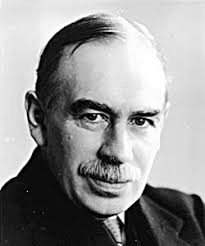
John Maynard Keynes (1883-1946): Argued for regulated finance and government spending to bring economies out of recession.

Joseph Stiglitz (b. 1943): Thinks markets often need governmental support.  Critical of Obama for doing to little to reform Wall Street.
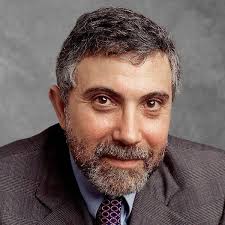
Paul Krugman (b. 1953): Believes stimulus is too small, regulations too Wall-Street friendly.  Thinks worst banks should be nationalized.

Peter Orzag (b. 1968): Obama budget guru, ex-Stiglitz protégé.  Wants governments to play a key role in private industries like health care.
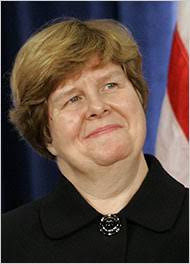
Christina Romer (b. 1958): Chair of Obama’s Coucil of Economic Advisers, has had to rethink her anti-Keynesian theories on deficit spending.
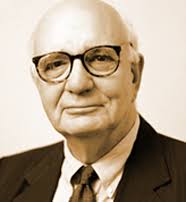
Paul Volcker (b. 1927): Former Fed chair slayed ’70’s “inflation dragon,” now wants to ban government-backed banks from risky bets.

Larry Summers (b. 1954): Formerly backed deregulation (with caveats), now wants new regulatory regime.  Critics say it doesn’t go far enough.
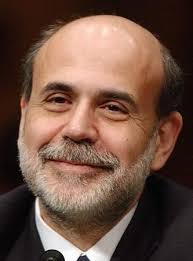
Ben Bernanke (b. 1953): Pre-crisis, Fed chair was seen as conservative Friedmanite; $2 trillion in loans later, he’s been cast as a neo-Keynesian.
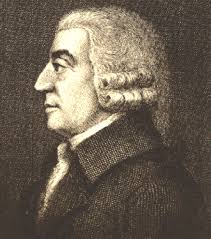
Adam Smith (1723-1790): Founder of free-trade economics, held that self-interested creates prosperity for all as if by an “invisible hand.”

Alan Greenspan (b. 1926): Maestro of the ’90’s boom but also a libertarian, now seen as major culprit for consistently vetoing regulation.
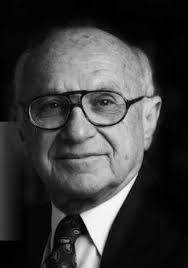
Milton Friedman (1912-2006): Laissez-faire leader of Chicago School, said government’s only task was to oversee money supply.  The anti-Keynesian.

Posted in Economics | Leave a comment

Classes for my Ph. D. School – Fall 2009

Next year, I’m going to Marquette University for my Ph. D.  However, I’m going to buy the books and act as if I was in the class.  I figure that this would at least give me some good preparation for next year, and I can see what my fellow classmates are reading.  I realize that next year will be a completely different schedule, but by acting in the program now, I’ll have a feel as to what the Ph. D. program is all about.  I’ve looked at the books and classes.  There are two classes I’m definitely taking: History and Theory of Ethics (here is the book) and Theory of Knowledge (the books are here and here).  In the Theory of Knowledge, it looks like a philosophy of science class.  I’m debating between four other classes: Aristotle, Early Analytic Philosophy (which covers Wittgenstein, Russell, Ferge and the Logical Positivists), Plotinus, and Medieval philosophy.  I have to pick one, but I’m leaning toward Aristotle or Early Analytic Philosophy.  Thus, I’ve created a poll.  Let me know which class I should take and if you can, explain why I should take it.  I’ll keep the poll open until this Saturday (Aug. 8th).

I’m also hoping that some of you out there would read the books with me and we can discuss about it.

UPDATE: Aug. 9, 2009.  The results are in.  Looks like it’s Early Analytic Philosophy.  The books are here, here, here, here, here, here and here.

I’ll be reading along during the semester so if anyone wants to read along with me and talk with me on the blog, that would be great.  I should let you know that I may put my full attention on the Theory of Ethics and Theory of Knowledge books because the Early Analytic Philosophy is beyond my range and I definitely need some outside input to understand these people.

Posted in Education | 7 Comments

Movie Review: (500) Days of Summer

As you know, I don’t do movie reviews unless the movie is really good and (500) Days of Summer is really good.  Simply put, you must see this movie. 

I can’t quite explain why it’s good.  Maybe it’s because it’s not a conventional love story.  Indeed, dare I say it?  I would probably say there are elements where it’s an anti-love story.  But I like it because it’s a good representation of real relationships.  There are no ideals, no great fanatasies, just reality.  Hopefully, people can see this and take in what real relationships, love and coupledom is all about.

Posted in Movie Review | 3 Comments