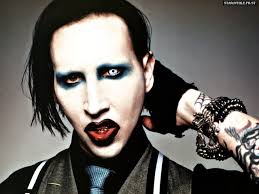
Argument about Violent Rhetoric Leading to Violent Action

  1. All forms of violent rhetoric leads to or causes violent actions.
  2. All violent actions are wrong and they should be prevented.
  3. Violent political rhetoric (e.g. putting crosshairs on a map) lead to the assassination attempt in Arizona.
  4. Violent music (e.g. Marilyn Manson) lead to the Columbine tragedy in 1995.
  5. Therefore, we should ban any form of violent rhetoric.

Perhaps Plato has something here: music and rhetoric will not be allowed in his Republic.

=    

I don’t agree with the argument above.  But my point is that if you’re going to claim it was politicians’ fault for causing a political climate that was violent through their speech, it seems like you’re in the same camp as saying violent speech through music caused Columbine.  If you don’t agree with the argument above, which premise are you going to attack and why?

Posted in Aesthetics, Culture, Government, Logic, Politics | Tagged , , , , | 2 Comments

Thinking about Acting Immorally

Suppose action A is morally wrong.  Person S does not plan to do A because s/he sincerely believes that doing it is wrong.  However, s/he is very tempted to do A, and so S constantly thinks about doing A but never actually does A.  Is S morally culpable?

Aristotle comes very close to answering this by saying that the unrestrained person is morally culpable because he knows that A is wrong, but nevertheless does it.  However, my example above never says that S actually does A; S wants to do A and desires to do A but never actually does A.  Can thinking–but not doing–an immoral action still be morally wrong?

Posted in Ethics | Tagged | 4 Comments

What I’ve Learned this Past Year — 2010 Edition

If you know me, I don’t do New Years Resolutions.  Instead, I reflect on the past year.  To me, if one hasn’t learned things within the past year, then it’s as if one hasn’t gained wisdom.  And if that’s the case, then was that past year even worth living?  Thus, here’s a list of things that I’ve learned this past year:

Economics

  • I’ve learned a lot about economics by reading some good books, but I’m far from being an expert.  I wish I knew more but going back to school has taken up a lot of my time and learning about economics has taken the back burner.  I’m hoping to get back into it as soon as I can.  But I guess a good start is to learn about Keynes and Hayek.

Liberty

  • I’m not a big proponent of natural rights.  To me, the notion is too abstract.  Instead, I opt for freedom and it seems that there are various levels of it where one can use one’s positive freedom and live one’s life to the fullest.  Simple negative liberty is simply living; positive liberty, it seems, helps one to live life to the fullest.  I explain more here and I hope to expand on this topic later on.
  • “Fighting for Freedom” seems to be empty rhetoric.
  • I still don’t get how one acquires property.  I think Rousseau may be right: someone simply says it and everyone else believes it to be so.
  • In my last class, oppression is a political ideal that doesn’t get any attention.  Mainly it’s because classical liberalism doesn’t see anything as oppressive except in the negative sense.  Positive liberty needs to make some headway.

Health Care

Metaphysics

Freewill

  • I’ve lately gotten interested in issues about Free Will.  Is it possible to exercise it?  I think one can.  Psychologists have made a lot of studies of people who have made their own choices in life, and those that have had choices made for them.  Not everyone prefers to make their own choices, some prefer to have other choose for them, or they believe that they cannot really exercise effective control.  But those that cannot or do not make choices has been strongly associated with depression, suffering, less fortitude, and overall loss of control of life.  Now here’s the interesting thing: even if determinism is true, I still think people could have a healthy belief in choice-making and their own choice-making effectiveness.  By capturing and incorporating one’s free, people can live healthier and take on a lifestyle with a robust attitude.

Religion

Culture

  • What can one do about being a snob?  In some ways, it’s helpful, but it’s just so downright high and mighty too.  Maybe the solution is to be an elitist for the common people.
  • The Middle East has many problems.  There are, however, some solutions.

Speech

  • Again, whenever you hear “it’s just my opinion,” it simply tells me that the person doesn’t want to argue because that person wants to hide behind a fake facade of one’s own comfortable dogmas.  If you really want to argue effectively, check this out.

But when everything is down, just remember: Awesomeness is everywhere.

Posted in Culture, Economics, Free Will, Health, Psychology, Relationships, Religion | 15 Comments

Movies for each state

Movie Map

An interesting view of how each state has been represented in movies.  You can the whole thing here.

Posted in Aesthetics, Culture | 2 Comments

Let’s See What’s in the News Today: 12/20/2010

Economics

  • An interesting article arguing that tax cuts do NOT create jobs.  The argument uses something simple: math.  Now there’s some facts you can’t dispute with.
  • Steven Landsburg has an interesting libertarian argument saying that if you’re against the health care bill because it forces you to have insurance, then you must also be against social security, because it also forces you to have retirement insurance.  For Landsburg though, he wants to get rid of them both.

Sex

Acadamia

Religion

  • Father loses his children because he’s agnostic: 

Crimes

Medicine

Posted in Economics, Logic, News, Pornography, Sexuality | Tagged , , , , | 5 Comments

First Semester is Done!

Well, my first semester as a Ph. D. student is done and although I am excited that I’m back in academia as a student, I’m also relieved that it’s over.  I’m not sure how to take this first semester, so I’ll just give a brief overview of my classes and see how this reflects the semester overall.

Plato

My Plato class was great.  I really appreciated what Plato did for philosophy and my respect for him was greater after the semester.  We read the easy stuff (Euthyphro, Meno) but slowly, it advanced to materials that I could not follow.  The hardest dialogue from Plato I’ve read before this class was the Symposium.  But we trenched through the difficulties of Theaetetus, Sophist, and Philebus.  I eventually wrote my final paper on Theaetetus which was no easy feat, but still fun to write.  I was completely lost at the Philebus and the Sophist was very abstract.  We did read the Republic and the Gorgias which have increasingly become my favorite dialogues.

Overall, I have a hard time reading the dialogues as philosophical works.  I see them as dramatizations which makes it more difficult to get to the philosophical meat of the text.  Thus, most of my papers were character analysis work or delving into the myths of Plato instead of looking at the actual arguments.  Plato, however, is not meant to be read just once and someday, I’ll read these works again to get a deeper meaning of Plato.

Political Philosophy

This class was challenging because I’ve never taken any political philosophy before.  I’ve known the standards such as Locke, Mill, Rousseau, Rawls, and Nozick.  But then we get to materials that deals oppression.  People like Lewis Gordon, Iris Young, and Sonia Kruks.  They were extreme eye openers.  I think the biggest thing that really saw the social contract theory in a new light is critical race theory.  I’ve heard of it before, but I’ve never actually studied it until this class.  It was great!  I eventually did my final paper comparing liberalism with Simone de Beauvoir’s The Ethics of Ambiguity.  I think I bit off more than I could chew because liberalism is such a vast umbrella.  I should’ve stayed within the Lockean view of liberalism and my paper could’ve been better.

Philosophy of Religion

I’ve taken many religion classes before as an undergrad, and I’ve taught it before as well.  So this class didn’t really bring anything new to the table–except maybe a few articles–but it did delve deeper into the arguments in a very analytic way.  I wrote my papers in a rigorous way where propositions followed an argumentative style in order to make the paper flow with the rest of the theme of the class.  Eventually, my final paper was a critique of Hare’s concepts of bliks as his response to Flew’s falsification of religion.

So this semester has had a great challenge.  I’m glad to have started, and I’m also teaching next semester.  Thus, I’ll be spending most of my break prepping for next semester.  Such is the life of the philosopher.

Posted in Grad School, Plato, Politics, Religion | Leave a comment

What’s in a Name?

A portrait shot of a serious looking middle-aged African-American male (Barack Obama) looking straight ahead. He has short black hair, and is wearing a dark navy blazer with a blue striped tie over a light blue collared shirt. In the background are two flags hanging from separate flagpoles: an American flag, and one from the Executive Office of the President.

Barack Hussein Obama.  Not many people emphasize the middle name.  But when they do, they really emphasize it.  This emphasis is also a disparaging or harsh tone.  This emphasis is usually from people that hate Obama.  Why is that?  Oh, I get it.  It’s because “Hussein” is the same name of the late Iraqi dictator Saddam Hussein.  So, let me see if I get this straight: if anyone has the same name as a dictator, then both of those individuals are bad.  Ok, let’s play out this game.

George H. W. Bush and his son, George W. Bush. A portrait shot of a smiling older male looking straight ahead. He has short gray hair, and is wearing a dark navy blazer with a blue styled tie over a white collared shirt. In the background is an American flag hanging from a flagpole.It seems innocent enough. . . except that was the same name as the last American dictator: King George III.  Oh my God!  Full-length portrait in oils of a clean-shaven young man in eighteenth century dress: gold jacket and breeches, ermine cloak, powdered wig, white stockings, and buckled shoes.

According to this logic, both Bushes were evil men.  Indeed, George Washington is an evil guy as well.

Let’s keep going.  Joseph Stalin.  That’s a good example of a bad guy.  But if you want to keep this logic, then anyone named “Joseph” is also a bad guy.  Too bad because there are a lot of people named “Joseph” or “Joe.”  But names are also translated into different ones based on the language.  Take my name for example: Shaun.  Shaun is an anglicized version of Sean, which is an Irish version of John, which is the Latin form of the Greek name of Iohannes, which is the Hebrew version of Yochanan, which ultimately means “YHWH [God’s name] is graceful.” So let’s look up “Hussein.”  Hussein is an Arabic version of Husayn, which is a diminutive version if Husan, which means “handsome.”  Sounds innocent enough.  Ahh but wait, there are other names that means “handsome.”  Alan means “handsome,” so does Kevin.  Should we demonize anyone named “Alan” or “Kevin” because they are a very indirect transliteration of “Hussein”?  If so, I guess we should’ve demonized both the 41st and 43rd Presidents for having the same name as America’s first dictator.


UPDATE: Ah, but if one says, but it’s Arabic and nothing good can come out of the Arabic language.  Really?  I suggest to educate yourself and see what words you’re not aloud to use.

Posted in Language | Tagged | 2 Comments

Let’s See What’s in the News Today: 11/28/2010

Relationships and Sexuality

  • In the Time Magazine this week, the headline cover was Who Needs Marriage? The results are quite interesting: the more educated and wealthy you are, the more likely you get married.
    • Here are some more interesting stats that I personally found quite interesting:
      • Today, only about half of Americans are married compared to about 70% in the 1960s.
      • Men actually prefer to get married than woman.
      • Unfortunately, 28% people responded that they believe in soulmates, and 79% people of the 28% believe they have found their mythic partner.
      • If you only have a high school degree, you’re more likely to get married younger.
    • My prediction is that overtime, marriage will become obsolete (40% of Americans agree with me) and when the government gets rid of tax benefits for married people (I’m sure it will happen someday), the only purpose of marriages will be religious.
    • Bella DePaulo has a reply here suggesting that the article is still marriage-centric.
  • Bust Magazine argues that Gay Bashing is similar to Slut Shaming: in both cases, the ridiculed victim committed suicide.  I see where they are coming from, but I take this as a categorical mistake.  Hopefully, I’ll write a blog about that later.

Economics

  • Warren Buffett has written a Thank You note to Uncle Sam for bailing out the banks in 2008, with a response here.  Buffett also argues that the rich aren’t being taxed enough, saying that Trickle Down theory just doesn’t work.  H/T to Kevin Bonnett.  Bill Gates agrees.
  • At the age of 34, David Stockman became Ronald Reagan’s budget director. And he helped engineer the largest tax cut in American history.  So just why is he so against extending the Bush tax cuts?  Read all about it here.  There was a fantastic interview with Fareed Zakaria on GPS.  Stockman finds both Democrats and Republicans inauthentic in their economic policies and it’s time to “stop playing Santa Claus.”  Indeed, he’s saying that the Republicans are now just a hashed-out recycled version of Keynesian economics, which means. . .
  • Friedrich Hayek may be making a comeback.

Food

  • Lisa Miller of Newsweek this week argues that America’s pickiness with food is part of the problem of class poverty.  She states that food choices has had a strong correlation with social class.  Obesity rates are rising because poor people can only afford cheap, unhealthy meals that quickly fills you up (e.g. fast food).  There is also a correlation between obesity rates and those receiving food stamps.  Quoting from the article:

Adam Drewnowski, an epidemiologist at the University of Washington, has spent his career showing that Americans’ food choices correlate to social class. He argues that the most nutritious diet—lots of fruits and vegetables, lean meats, fish, and grains—is beyond the reach of the poorest Americans, and it is economic elitism for nutritionists to uphold it as an ideal without broadly addressing issues of affordability. Lower-income families don’t subsist on junk food and fast food because they lack nutritional education, as some have argued. And though many poor neighborhoods are, indeed, food deserts—meaning that the people who live there don’t have access to a well-stocked supermarket—many are not. Lower-income families choose sugary, fat, and processed foods because they’re cheaper—and because they taste good. In a paper published last spring, Drewnowski showed how the prices of specific foods changed between 2004 and 2008 based on data from Seattle-area supermarkets. While food prices overall rose about 25 percent, the most nutritious foods (red peppers, raw oysters, spinach, mustard greens, romaine lettuce) rose 29 percent, while the least nutritious foods (white sugar, hard candy, jelly beans, and cola) rose just 16 percent.

    • So it looks like a new luxury could be healthy foods.  But when it comes to food, Americans are “food libertarians.”
    • The article also notes that eating like the French may have some more benefits.  I tackled that in a previous blog here.  But the French are healthier than us and their food culture has solidarity behind it.  But more than that, this is a community effort.  As Michael Pollen says, the food movement is very young.
    Posted in Culture, Economics, Marriage, News, Paper Topic, Relationships, Respect, Sexuality | Tagged , , , , , , | 2 Comments

    Interview about Supernormal Stimuli

    At Forgoodreason.org, I’m listening to an interview about how our instincts have become “supernormal” in our evolution to the point where it’s starting to be detrimental to us.  Example: our ancestors were always on the go and so to compensate for all of those lost calories, they had to eat a lot.  But through the industrial revolution, we really don’t need to move around as much anymore.  But that instinct of eating a lot is still with us.  Thus, we will eventually become overweight.  Indeed, obesity is now the epidemic of the early 21 century.  She has more interviews that deals with stuffed animals, junk beliefs, porn, masturbation, and television sitcoms.  Her book is now on my wishlist.  Fascinating stuff.

    Posted in Culture, Evolution, Experts | 4 Comments

    Let’s See What’s in the News Today: 11/14/2010

    Science:

    The Large Hadron Collider has created a “mini big-bang” which will give scientists a better understanding of the universe.

    Check out some of the strangest 10 facts about the universe.  My favorite is number one: Gödel’s incompleteness theorems still blows my mind.

    Politics:

    Bill Maher gives a good account on why the left/right divide has been much more polarized and how the right is going more right while the left. . . is actually going more right, right into the center.  It seems that it’s the dynamic of politics: one generations right issue will be the next generation’s center issue. Hat tip to Felicia Willems.  Jon Stewart rebuts here.

    Sex:

    A question was posed about why polyamorous couples have a lesser stigma than other types of relationships.  There’s only been one response so far, but I agree with Smith’s answer.

    Hong Kong is making the world’s first 3D IMAX porn.  It’ll probably be a huge success since the movie is called Sex & Zen, which is based off of ancient Chinese lure.  I’m not sure it’ll make it in the states since most IMAX movies will probably not carry it.

    A porn company called Private wants to build 100 luxury hotels around the world.  He’ll even offer guests to stay for free.  There’s one caveat though: you must perform some sexual act on a webcam in the hotel and that act will be sent out through the internet.  It’s an interesting business move.  Why have actors perform when you can have the couples do it for free and they stay at a nice hotel?  The subscribers will basically pay for the hotel services.

    Posted in News | Leave a comment