As promised from a previous post, I would present some theories or models as to why there’s a huge conflict in the Middle East. These aren’t my views. They are views that I have picked up over time and have tried to make them somewhat systematic so that I can see the coherency. I’m not going to personally promote any of the ideas or say which I consider the best, mainly because I can’t form that opinion right now. These ideas mainly comes from David Kilcullen in his book: The Accidental Guerrilla. Plus, I had some stuff to make it fuller. I also learned a lot from my Anthropology of War class that I sat in on at Weber State University. We need some explanations for the conflict we’re in. We need to understand the nature of war. With the fall of the Soviet Union, the world no longer fell into an us vs. them mentality. Thus, the world is becoming multi-faceted. We have to get away from the idea that there are winners or losers in today’s world. War is no longer the same. It’s now a hybrid war, urban warfare. The only country to move men, material, troops easily is the US. Only an idiot would fight the US head-on. Thus, with ways to fight, we have a new way to wage war: Modern warfare = Guerrilla warfare + Political organization + terrorism.
Democracies play by the rules. That’s a weakness. This is because we won’t back down against this. Thus, terrorists use the infrastructure we have and then use it against us. But as Bernard Lewis says, democracies are more difficult to create. They are also more difficult to destroy.
These theories come from David Kilcullen: he’s a consultant on counterinsurgency and counter-terrorism. He was with the Australian Army, but now he works for the US State Department. He worked with General Patraeus on getting the Iraq surge in 2007. He has a doctorate in politics, with an emphasis on counterinsurgency, guerrilla warfare and counter-terrorism. So let’s see what these models or these theories are.
Model One: The Globalization Backlash Thesis
Non-integrated gap is filled with conflicts after the fall of the Soviet Union. This also stems from Thomas Friedman in his book: The World is Flat. 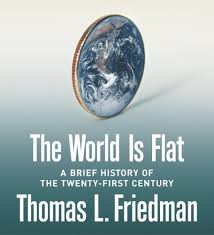 The world is becoming flat meaning that globalization is flattening the world to an equal playing field. Technology is here to level it out. Traditional societies have had coercive effects. This causes violent antagonism. It’s perceived as westernization. Osama bin Laden has even mentioned this. Now the assumption is that all of this technology has helped us get out of the anarchistic war. This theory is saying that initially, high-tech technology has actually worsened the situation. Indeed, we’re actually closer to the state of nature than we have in the past 50 years. A good example is the Cold War: I won’t bomb you if you won’t bomb me. So let’s see how technology has created a bigger state of nature, indeed it’s made the whole world into a state of nature. It’s made things unstable and decentralized. Because of this, a large part of our economy doesn’t have a sovereign which makes that aspect anarchistic.
- Transportation: it’s so decentralized that people and goods can move about cheaply and quickly.
- PROS: cheaper food, fuel, clothing, jobs.
- CONS: Problems in one aspect of the world effects the whole globe. Example is mad cow disease. But this result could mean anyone could get a disease and spread it to other parts of the world. So globalization can give forth a new form of bio-terrorism.
- Communications: it’s also decentralized that the Internet can communicate with anyone anywhere and there’s really no one in charge.
- PROS: we can talk to anyone in the world and transmit and receive complex information within seconds.
- CONS: since I can obscure data and add new data into the system, I have the ability to corrupt the system through fraud, theft, and the spread of computer viruses.
- International Finance: we can buy and sell currencies, stocks, and bonds worldwide.
- PROS: it gives anyone the ability to capitalize financial opportunities to make money.
- CONS: the whole world is competing in a disastrous capital flight. If one economy goes down, the rest of the world goes down. Example: the Great Depression. How does terrorism work through this? One can easily transfer funds through international borders which makes terrorists themselves easier to move around the globe, which makes it easier to hide in different countries so that they can acquire weapons, explosives unobserved.
- Internet. It’s great for finding information and communication, but it has also made a new meeting place for certain groups of people.
- PROS:there are groups of people that want to play chess, chat, sports fans, and even philosophers.
- CONS: it’s also a meeting place for pedophiles, bomb-makers, violent people, and homo-phobes. Now if these people were alone, they probably wouldn’t do much. But because they find a lot of people who are like them, they become emboldened and empowered to meet people who are “just like them.” Thus, they become more confirmed in their beliefs and more likely to act.
Through technology, no one is in charge. Again with the Internet is a good example. Anyone can buy a computer and join and through this, there’s no central authority controlling it all on who can decide who gets on the Internet and who doesn’t. ANYONE can do it. So in Hobbesian terminology, there is no sovereign. The consequence of this is that without a centralized controlling authority (and remember, we are by nature selfish according to Hobbes), it’s allowed fraud, theft, violence, and stalking easier.
There’s a financial state of nature: The financial system uses the Internet mainly (which is decentralized) and these traders operate on egoistic principles (they’re in it for profit). There are no controls on the market and the richer a corporation is the more powerful it becomes. It fears all lost and hopes for gains.
There’s a scientific state of nature: Bio-technology is relatively inexpensive and very rewarding. A good-seized country can build a atomic warhead. New drugs only need the finances of a pharmaceutical company. If done right, it will make some company’s (and perhaps a state) rich. Failure to have the right technology will leave countries open to biological blackmail.
The world still seems to be a threatening place and it’s creating an unstable and uncontrollable state of nature. Back then, fighting, robbery, kidnapping, assassinations, and guerrilla warfare were done by and for individuals and small groups. Now it’s ideological nations doing this. We have the assumption that terrorism is a form of low-intensity war to backward places, where civil control is weak that’s mainly motivated by fear, pride, and greed. Thus, terrorism is now high-tech terrorism. It takes advantage of the things in the global economy. They use resources from one part of the globe to act in other parts. Ironically, they are the most globalized people in the world. They use the internet, cell phones, the latest technology against us. In other words, they want to destroy the global economy in all it’s forms, but in order to do so, it has to use the global economy. Hardly anyone is against globalization but takes it seriously: ever notice people use the Internet and a cell phone to destroy globalization? It gives them access for propaganda. It’s a counter-globalization. It makes the groups interact with each other that couldn’t have done so before. They have message unity.
The news, for example, is unfiltered. You can read anyone’s blog. There’s no editing. It’s made things uneven. They’ve benefited less. It’s a lack of control. This pace is going wild and through this, it increasingly makes the haves and the have-nots. With that, globalization will increasingly have security risks which will make it extremely hard for the government to control it.
Solution: we must increase globalization.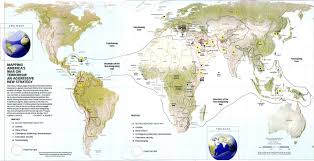
Capitalism increases tolerance. Many Americans are mad at the French, but notice that we’re not at war with them. Why? It’s because we trade with them. Calling a boycott against France, therefore, is a bad idea.
The Arabian countries put together possess 65% of the presently known oil reserves in the world, thus ensuring their continuing influence on the global economy and international politics for the next several generations. At the same time, since 1990, Saudi Arabia has been the US biggest arms customer, paying more than $40 billion for weapons and the latest surveillance equipment. At the same time, they have received expert antiterrorist training from the UK’s elite Special Air Services unit. Anything outside of that line hasn’t been globalized yet and using Friedman’s line of thinking, they’re not “flattened” out yet. They’re not on the same playing field. We need to increase it in order for everyone to be on the same playing field and that will increase peace. But then, Friedman writes a sequel and this adds an amendment to his solution:
Solution part 2: and act as if Global Warming is true.
Now this might sound weird, but here’s the story:
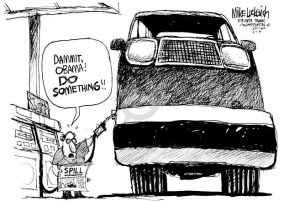
This is dumb. We are simultaneously fighting and supporting the war on terror. We need to break this cycle. Don’t believe me? Check this this out, and this as well. Friedman writes: “through our energy purchases we are helping to strengthen the most intolerant, antimodern, anti-Western, anti-women’s rights, and antipluralistic strain of Islam–the strain propagated by Saudi Arabia. . . we are financing the U.S. Army, Navy, Air Force, and Marine Corps with our tax dollars, and we are indirectly financing, with our energy purchases, al-Qaeda, Hamas, Hezbollah, and Islamic Jihad.” But in the end, we’ve done nothing to get off of this oil. Even President Bush has said that we’re addicted to oil. Thus, ending this addiction to oil will not only be helpful for the environment, but it’s also a strategic imperative. “Our addiction to oil makes global warming warmer, petrodectators stronger, clean air dirtier, poor people poorer, democratic countries weaker, and radical terrorists richer.” Eventually, Saudi Arabia, which constitutes 1% of the Muslim population, would support 90% of the expenses of the entire faith, overriding other traditions of Islam. But they’re tricky. There’s a fund called the Islamic Relief Organization. The 9/11 Commission found out it’s a fake, it directly supports the Taliban and al-Qaeda. It’s already built 40 mosques branding their form of Islamic education. They’ve already employed 6,000 teachers, mainly in the Pakistan region. Mainly, these Wahhabi type of schools are public schools where everyone can go to them, so it targets impoverished people with little or no education. They offer free room and board, you can’t beat that. Hezbollah (gets their funding from Iran) promised to give the Palestinian people reparations for the Jews destroying their homes. They even go so far to give them furniture to replace their old ones. With that, many people are starting to see Hezbollah as a friend. Take a look at Lebanon: it’s the closest thing it has to a democracy, and yet it doesn’t sell any oil. Thus, Friedman has what he calls, the Law of Petropolitics:  the higher the price of oil goes, freedom goes down. When the price of oil falls, the sellers are more concerned about what the outside world thinks of them. As soon as the price of oil goes up, freedom of speech, of the press, and other institutions of liberty starts to erode. Better pics and particular graphs of certain countries can be seen here. Oil-backed regimes that do not have to tax their people for revenue—because they can just drill an oil well and sell the oil abroad—also do not have to listen to their people or represent their wishes. They can’t rebel because the oil revenue allows governments to spend excessively on police, internal security, and intelligence forces that can be used to choke democratic movements. On an economic study based on data from 169 countries, economist Michael Ross demonstrated why women in Middle Eastern countries continue to be undereducated, underrepresented in the workforce, and politically disempowered: oil.
“[F]ewer women work outside the home, and fewer hold positions in government, than in any other region of the world. According to most observers, this troubling anomaly is due to the region’s Islamic traditions… Some even argue that the “clash of civilizations” between the Islamic world and the West has been caused, in part, by the poor treatment of Muslim women . . . This paper suggests that women in the Middle East are underrepresented in the workforce and in government because of oil —not Islam … The failure of women to join the nonagricultural labor force has profound social consequences: it leads to higher fertility rates, less education for girls, and less female influence within the family. It also has far-reaching political consequences: when fewer women work outside the home, they are less likely to exchange information and overcome collective action problems; less likely to mobilize politically and to lobby for expanded rights; and less likely to gain representation in government. This leaves oil-producing states with atypically strong patriarchal cultures and political institutions.”
Of the twenty-three nations in the world that derive a clear majority of their export income from oil and gas, not a single one is a democracy. So the best way to fight the war on terror is by going green. Plus it helps the environment. Nothing wrong with that.
With this, Friedman challenges conservatives like Dick Cheney who holds on to the 1% doctrine. If one is going to be consistent, shouldn’t this 1% doctrine also hold for Global Warming as well?
Model Two: The Globalized Insurgency Thesis
There are two types of terrorism:Local and Traditional, and Transnational. These groups sometimes compete with one another. Al-Qa’ida is a transnational movement to overthrow the political movement in the country. They use the whole world as a battle ground. The steps are:
- Provocation: provoke, blow up buildings. Make people overreact.
- Intimidation: if you don’t help us, we’ll kill you.
- Protraction: if you can’t win, pull back and regroup. It’s not a retreat. This leads to. . .
- Exhaustion: the other side gets sick of it.
Focus on the population, they are they center of gravity. Under this model, why did Obama get elected? If we’re going to totally win in Afghanistan, we need 5-600,000 troops. The first thing you need to have a stable government is security. If you don’t have that, you don’t have a stable government. It’s a war without fighting.Their primary purpose is not to defeat or even to weaken the enemy militarily but to gain publicity and to inspire fear–a psychological victory. You attack the enemies’ mind. We’re really good targets of this.
You set it up like players. Bin Laden is like the CEO: not much influence but has influence. He acts more like a venture capitalist. People come to him with ideas and he approves of them or not. That’s about it. He supplies them the money. It’s like a corporation. Bin Laden is the CEO, al-Zawarhiri is like the managing director. You defuse the “war” which makes it harder to target where there’s a lot of disaggregation. Each group has different ideological mindsets. But more often than not, they help each other out. Al-Qa’ida won’t help Hezbollah or Hamas. Two different religions. But they have similar tactics even though they don’t like each other. We must understand the enemies’ propaganda. It’s not to defeat the enemy but to weaken them so they can leave. In 2006, $40 million went to the Taliban troops. Where does this money come from? Saudi Arabia and Pakistan, US foreign aid that was supposed to go to foreign help, but they reroute the money so that it goes to them. It’s an economic jihad. Hit the WTC then create a guerrilla infrastructure. Our foreign policy has been, “I’m concerned,” or “I’m worried.” That’s pretty weak. As precedents, al-Qaeda repeatedly cites American retreats from Vietnam, from Lebanon, and–the most important of all, in their eyes–from Somalia.
Solution: we must get the local government involved in these regions instead of just the national stuff.
You can win counter-insurgencies. Along with this, we shouldn’t be fighting the bad guys; it should be us training the people to have a force and security to fight the bad guys. Maybe dropping off leaflets in Pakistan would help too. We did it in Iraq, it helped out. Israel did it when it warned it was going to bomb the Gaza Strip. It helped somewhat. But now the Taliban is doing it and it says help us kill American troops. So why don’t we counter that? Thus, if they’re going to use propaganda, we should use some sort of counter-propaganda mechanism. In fact, the leaflets say help us capture the obstacles, and we’ll pay you $250 dollars. Guess what the average yearly wage is for the Afghan? $300. For an American troop, it’s more money. General Petraus is figuring this out. Unfortunately, the army is a little slow in getting the information throughout. That’s the upshot, if we lose the population, we lose. Again, that’s how we won the Cold War. We didn’t win it by marching tanks into Baghdad. We won it through ideas and values. Eventually, the other side has to go home (except for the diehards). They’ll say, maybe those ideas are worth something. I’m going to go home. In a sense, you make them exhausted. But it’s not just over there, if you lose support over here, we lose. Von Clausewitz said that there’s a trinity of war: People, Govt. military. We can probably also add technology and media. At the same time, the international community to join you would help because this is an international problem, not just a local one.
Model Three: Civil War Within Islam Thesis
Let’s try an analogy. The main Western religions have faced a crisis and they had to resolve that crisis. For example, Judaism faced a crisis in the late 1800s and the question they had to face was: how should we deal with Antisemitism? Now, on the one side, Jews said that they should assimiliate into whatever culture they’re in and hopefully, they’ll be seen as another citizen in the land. Eventually, this formed Reform Judaism. On the other hand, there were people who said that this would never happen, that a Jewish state needs to be formed because that is the only way that they can be safe. Thus, Zionism was born. Now, this debate was big where there were Zionists and anti-Zionists, but eventually, WWII happened and after the Holocaust, the debate instantly swung into the Zionists favor.
Another example: Christianity. They faced a crisis in the 16th century in which the question they had to face was: is being a Christian mainly about good works (Catholic view), or was it mainly a matter of belief and faith (Protestant view)? Well, this battle was literally bloody. There was the 30 Years War, and all over Europe, the question was resolved: each state will dictate their own religion. And then later on, the United States will say freedom of religion.
Now, in the 21st century, Islam is now facing a crisis. The question they have to face is: can Islam accommodate and assimilate modernization and Western values but still be true to the Muslim faith? A huge majority says that they can. They can take on modernization and value some Western traditions and values. Unfortunately, there is a loud and violent minority who says no. Their reason is because these new innovations will actually undermine Islam and destroy it from within. Al-Qa’ida is part of the dynamics within the Islamic world. Thus, the West is a target, but only of convenience. They attack America, but it’s not fundamentally directed at the West, but they use the attacks on the West and they exploit our responses in order to fulfill their real objective: gaining more credibility over the Islamic world. Thus, under this model, we are witnessing the battle for the soul of Islam, a violent competition on who’s going to be in charge of Islam.
They try to overthrow the existing government and religious structures. Attacks on Western countries are used to create a better place for you within Egypt or some other country. Al-Zawahiri has said this is how it is. We’re battling for a greater Islam. Right now is just a launching pad against the West. Indeed, he said that 9/11 was a total failure because he expected that after this attack, all of the Middle East would rise up and fight against the West. That didn’t happen. Create an Islamic State then spread it globally. Conquer the Muslim world. Go after Europe. After that, go after America. Fortunately, all of the terrorist factions can’t unite. If they did, it would be very difficult to fight them. There has been a Shiia revival. There’s talks of a possible quasi-Iranian state in Iraq. So how do you win? Well, how did we win the Cold War? We quarantined them.
Solution: Containment Strategy.
Right now, we’re fighting it all on both sides at the same time. Not the best strategy. This makes us the enemy. We’re getting involved in a domestic dispute. We fail to listen to the Muslim allies. Humans are bad at listening. We took on more than we could handle. We failed to look at the ideological fault-lines within Islam. We did that when we lumped it all and called it “A Global War on Terrorism.” When we did that, this made the Sunni and the Shiia (who’ve hated each other for centuries) to unify. It’s kinda like how Russia and China lumped together under Communism. Best example is by looking at this video.
So only take one enemy at a time. We’re taking on about 60 enemies at a time and by combining these groups, they say to themselves, “well, since America is grouping us together, we might as well fight together. So with this, we’ve just happened to wade into their domestic dispute, but then have lumped them altogether thus having all of these groups gang up on us, which in turn, makes it seem more credible. Iran and Al-Qa’ida actually hate each other. But now, they’ve both slowly ganged up on us. Bernard Lewis says, “my worst-case scenario is that Europe, and possibly also the rest of the West, and the Islamic world destroy each other, and the future belongs, or is contested between, India and China as the superpowers of the second half of the 21st century – my best case scenario is that, somehow, with our help, or at least without our hindrance, the peoples of the Middle East succeed in developing open, democratic societies, in which case the Middle East would be able to resume its rightful place, which it has had twice before, in world civilization.”
Model Four: Asymmetric Warfare Thesis
We have a strong military. Who’s catching up? China. Regardless of your ideology, you don’t fight the US in conventional warfare. Only an idiot would fight the US head-on. Instead, you use other techniques: propaganda. It’s like Groundhog Day. We do the same thing again and again and again and we get the same results, but expecting to get something different. The US defense budget in 2007 accounted for 54% in total global defense spending. You can’t breach that. Thus, you have to confront the West through other means.
Asymmetry of cost: How much is it to stay? It’s expensive. In 2008, it cost the United States $4 million per day. For them, how much is it to fight? It’s cheap. The 9/11 Commission estimated that it cost al-Qaeda $500,000 for 9/11, and that includes the training.
Asymmetry of capacity: Our military is one of the strongest in the world, but we’re horrible at rebuilding. Our military isn’t in the business for nation building, they aren’t trained for that. Example: Our Special Forces. What was their purpose? Train the locals. But now, they just go out and kill. We’re only thinking in this conventional style when the world is more complex than that.
Solution: we need to reorient ourselves to non-conventional methods.
Who knows? We may be fighting the Chinese soon. Our military compared with our diplomatic International Agency is 350:1. Other Western countries are about 10:1. This is abysmal. Another problem is in Britain, if you’re a commander, you’re going to stay a commander. In our military, if you’re passed over a promotion twice, you get moved around. In Russia, they have one person who’s whole entire expertise is to know about South Carolina. In our state dept., you get moved around so much that you can’t focus. In other words, we lose experts. In hybrid wars, technology is largely irrelevant. In the Vietnam war, guess how they got us? Treelines, hiding in the trees. To repeat: we’ve had a lot of experience in Guerrilla warfare. We fought against the Vietnamese like this, we know many countries who fight other countries like this. We should be able to learn from it.
Model Five: The Clash of Civilizations Thesis
Before the Cold War, the world was divided into the West and the Rest:
Then, during the Cold War, it was an “us vs. them” mentality where the whole world got involved:
After the Cold War, everyone thought that the world will now be peaceful because everyone will now join up to a liberal democracy, no more external battles, and the world will be peaceful. Thus, in a post-Cold War world, human rights, liberal democracy and capitalist free market economy had become the only remaining ideological alternative for nations.
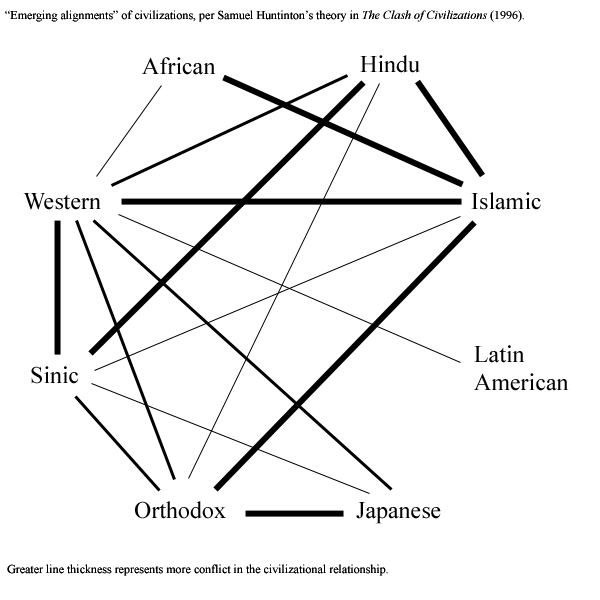
From Samuel Huntington, he said that the conflicts were only beginning. For the past few centuries, the conflicts of the world were mainly internal conflicts in the western world. For example, monarchies, fascism, communism, democracy those are all western ideas. And so the past century has mainly been a fight within western culture and western civilization. But now, that our western fighting has been resolved, other civilizations are catching up technologically. And so the conflict is now going to be deep seated. Now that the communist Soviet Union no longer poses a threat to the Free World, and the United States no longer poses a threat to the communist world, countries in both worlds increasingly see threats coming from societies which are culturally different. The conflicts now will not be ideological or economic; rather, it will be cultural. Ideologies are actually shallow, but cultures run deep. History, language, culture and tradition and most important religion. These are the products of centuries. These run deeper than political processes and political regimes. Culture is the thing that all civilizations have in common. For example, you can imagine some members of your family to be a conservative, liberal, fascist or communist. That’s possible. They come from the same western fountain. But by contrast, the ideas of Christians and Muslims were much more different. At the same time, the elites in the Muslim world were actually becoming de-Westernized. Now, civilizational rallying is taking place and the elites of these different places of the world are going back to their traditions that is totally different than Western thinking.
So now, we have to get out of this “us vs. them” mentality. The world isn’t made up of friends and enemies. The world is not bipolar. Rather, the world is multi-polar and multi-civilizational. In this new world order, the most pervasive and dangerous conflicts won’t be between social classes (like the rich and the poor), or between ideologies, but between peoples belonging to different cultural entities:
The ideas of liberalism, constitutionalism, separation of church and state, individualism, human rights, equality, liberty, the rule of law, democracy, free markets don’t have much resonance in Islamic, Confucian, Japanese, Hindu, African or other orthodox cultures. In short, from out point of view, the world is divided between a Western one and a non-western many. People are no longer asking “Which side are you on?” but instead, “Who are you?” Because of current expansions, these cultural divides are becoming more distinguished and because of modernization through economics and socio-economics, people are feeling less in sync with their cultural identity. At the same time, the idea that there would be a universal civilization is itself a Western idea. Indeed, those universalist pretensions increases the conflict. Huntington also argues that the widespread Western belief in the universality of the West’s values and political systems is naïve and that continued insistence on democratization and such “universal” norms will only further antagonize other civilizations. In short, democratic states have commonalities with other democratic states: they don’t fight each other. But these Western democracies strengthens anti-Western political forces. What the West sees as universal, the non-West sees this as simply Western. Or as Huntington puts it: “What is universalism to the West is imperialism to the rest” (p. 184). Huntington writes:
It is my hypothesis that the fundamental source of conflict in this new world will not be primarily ideological or primarily economic. The great divisions among humankind and the dominating source of conflict will be cultural. Nation states will remain the most powerful actors in world affairs, but the principal conflicts of global politics will occur between nations and groups of different civilizations. The clash of civilizations will dominate global politics. The fault lines between civilizations will be the battle lines of the future.
Thus, “groups or states belonging to one civilization that become involved in war with people from a different civilization naturally try to rally support from other members of their own civilization.” They have some kinship. Over time, civilizations will see each other as having more or less tensions.  This book was written in 1996 and he predicted that the first major conflict is going to be between the West and Islam. Along with Sinic-Western conflict, he believed, the Western-Islamic clash would represent the bloodiest conflicts of the early 21st century. But couldn’t we win the “hearts and minds” of the people and show them the superiority of these Western Values? Huntington’s answer: “The West won the world not by the superiority of its ideas or values or religion (to which few members of other civilizations were converted) but rather by its superiority in applying organized violence. Westerners often forget this fact; non-Westerners never do” (p. 51). The next conflict immediately after is going to be the West and Sinic (China), but that’s mainly going to be economic or military might. The expansion of the West has now ended, and the revolt against the West is now beginning. We’re just seeing the beginning stages of it. As he puts it, “We are witnessing ‘the end of the progressive era’ dominated by Western ideologies and are moving into an era in which multiple and diverse civilizations will interact, compete, coexist, and accommodate each other” (p. 95). In Huntington’s view, East Asian Sinic civilization is culturally asserting itself and its values relative to the West due to its rapid economic growth. Specifically, he believes that China’s goals are to reassert itself as the regional hegemon, and that other countries in the region will ‘bandwagon’ with China due to the history of hierarchical command structures implicit in the Confucian Sinic civilization, as opposed to the individualism and pluralism valued in the West. Eventually, he predicts that Sinic civilization and the Islamic civilization will possibly be allies to each other. Specifically, he identifies common Chinese and Islamic interests in the areas of weapons proliferation, human rights, and democracy that conflict with those of the West, and feels that these are areas in which the two civilizations will cooperate. Russia, Japan, and India are what Huntington terms ‘swing civilizations’ and may favor either side. Russia, for example, clashes with the many Muslim ethnic groups on its southern border (such as Chechnya) but—according to Huntington—cooperates with Iran to avoid further Muslim-Orthodox violence in Southern Russia, and to help continue the flow of oil. Huntington argues that a “Sino-Islamic connection” is emerging in which China will cooperate more closely with Iran, Pakistan, and other states to augment its international position. He also states that the West and Islam is going to have major conflicts because they both claim:
- Missionary religions, seeking conversion of others.
- Universal, “all-or-nothing” religions, in the sense that it is believed by both sides that only their faith is the correct one.
- Teleological religions, that is, that their values and beliefs represent the goals of existence and purpose in human existence.
Solution: “Clashes of civilizations are the greatest threat to world peace, and an international order based on civilizations is the surest safeguard against world war.”
Maintain economic and military power in relation to other civilizations. Other than that, there is no true solution to the world’s problems other than coexistence. Huntington gives a striking example: if Saddam Hussein had nuclear weapons in the early 90s, chances are he would still be holding onto Kuwait. The whole world watched and they learned a powerful lesson: if you have nuclear weapons, the United States won’t fight you. For the West to survive, Americans have to reaffirm their Western identity, meaning that our civilization is unique, but certainly not universal. It’s to renew and preserve it’s identity against any challenges from non-Western societies. Thus, world leaders must accept and cooperate with these other civilizations.
It’s a long-winded post, I know. But hopefully, this clarifies the conflict a little better.








 Shaun Miller's Ideas